NFT Royalties for Musicians: How to Earn from Secondary Sales
 Sep, 17 2026
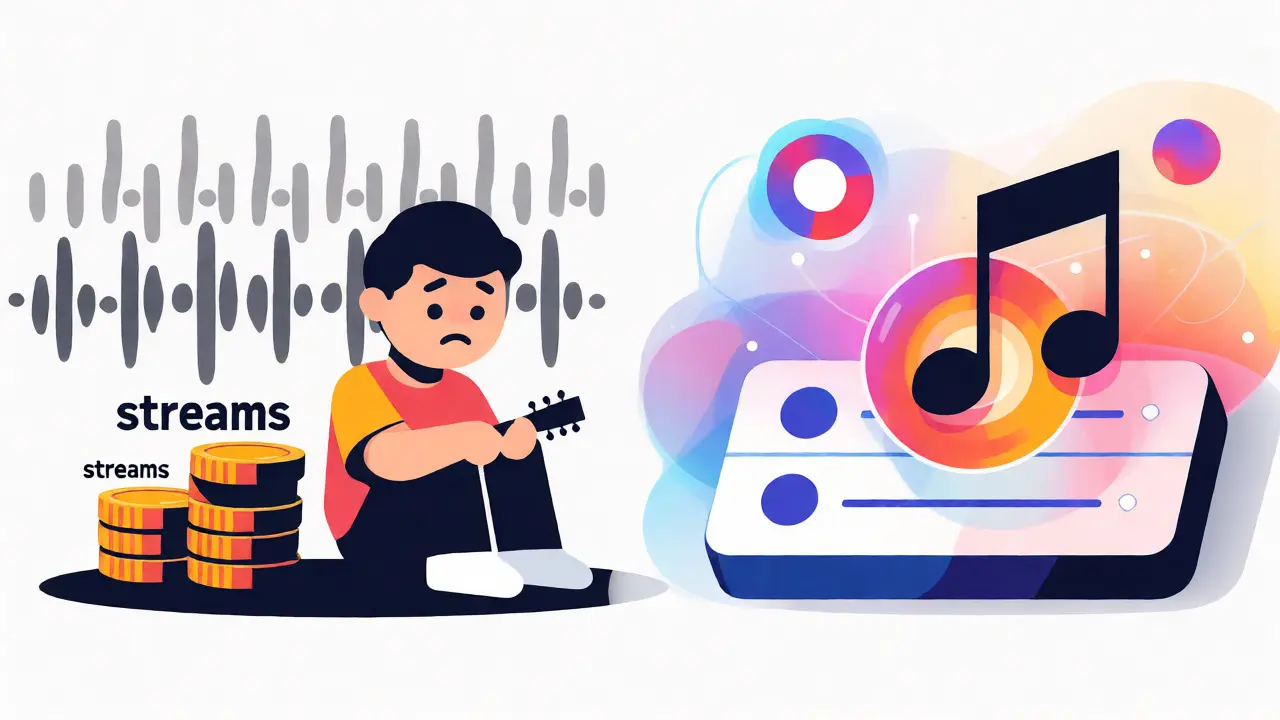
Imagine releasing a song that becomes a hit. In the traditional streaming world, you might earn $0.004 per stream. If that track goes viral and is resold or traded as a digital collectible, you often see zero extra cash. NFT royalties change this equation entirely by allowing musicians to automatically capture a percentage of every resale on the secondary market. This isn't just theoretical; it's a tangible shift in how artists get paid, moving from a one-time sale model to continuous passive income. But here is the catch: not all platforms enforce these payments equally, and technical hurdles can trip up even savvy creators.
The Core Problem with Traditional Music Revenue
Let’s be honest about the current state of music income. For most independent artists, streaming platforms are a volume game where you need millions of plays to make rent. According to Soundcharts data from 2022, the average payout sits between $0.003 and $0.005 per stream. You could have a fan who loves your work so much they buy your album, but if they later decide to sell that digital copy to someone else, you don’t get a cut. The value appreciation of your art benefits the collector, not the creator.
Non-Fungible Tokens (NFTs) solve this specific inequity. By tokenizing music assets, you create a digital certificate of ownership that lives on a blockchain. When that asset changes hands, a pre-programmed rule triggers a payment back to you. It transforms your catalog from a static product into an appreciating asset that pays dividends long after the initial drop.
How Smart Contracts Automate Your Paycheck
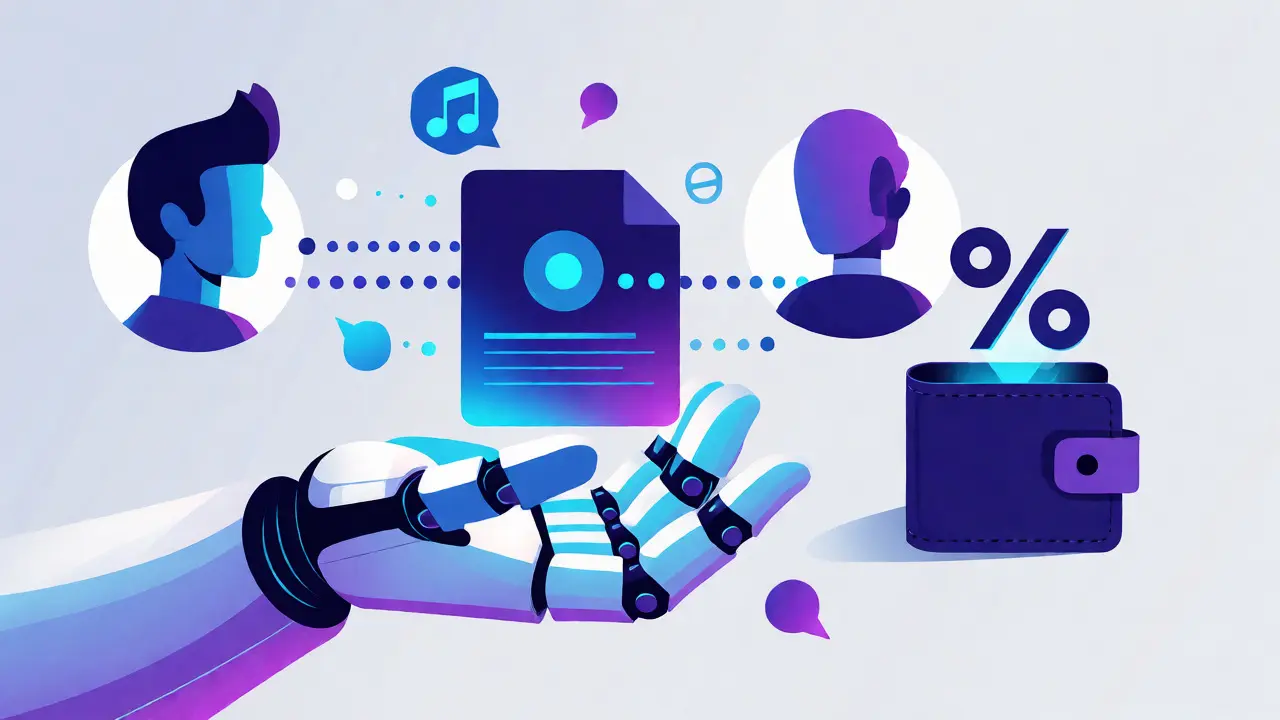
You might wonder, "Who actually sends me the money?" The answer is code. Specifically, smart contracts. These are self-executing contracts with the terms of the agreement directly written into lines of code. When you mint your music NFT, you embed royalty parameters-usually a percentage like 5% to 10%-into the contract.
Here is the workflow:
- Minting: You upload your audio file and metadata to a platform like Royal or OpenSea.
- Setting Terms: You define the royalty rate. Most musicians stick to the 6-8% range to remain competitive while ensuring profit.
- Secondary Sale: A collector buys your NFT from another user on a marketplace.
- Automatic Trigger: The blockchain verifies the sale. The smart contract splits the payment: the seller gets their share, and your wallet receives the royalty instantly.
This process happens without lawyers, invoices, or waiting 90 days for a statement. On networks like Ethereum, settlement takes seconds. However, remember that gas fees (transaction costs) can sometimes eat into small profits, especially on congested networks. Using Layer-2 solutions like Polygon can mitigate this, keeping fees under a dollar.
Marketplace Enforcement: The Hidden Trap
If smart contracts are automatic, why do so many musicians complain about missing royalties? Because enforcement is not universal. The blockchain records the transaction, but whether the marketplace honors the royalty instruction depends on its own policies. This has led to what industry insiders call the "royalty wars."
Some major platforms, such as LooksRare, initially made royalties optional to attract traders with lower fees. They argued that high royalties discouraged trading volume. Others, like Foundation, strictly enforce them. If a collector buys your NFT on a platform that ignores royalties, you might miss out on that 10% cut, even if the next buyer sells it on a compliant platform.
| Platform Type | Royalty Enforcement | Best For | Risk Level |
|---|---|---|---|
| Music-Specific Platforms (e.g., Royal, OneOf) | Strictly Enforced | Fans seeking direct artist support | Low |
| General Marketplaces (e.g., OpenSea, Rarible) | Variable / Optional | High-volume trading | Medium |
| Aggregators (e.g., Blur) | Often Zero-Royalty Focus | Speculators and flippers | High |
To protect yourself, always check the marketplace’s policy before listing. Some artists now add non-compliant marketplaces to a blacklist within their collection metadata, though this doesn't technically prevent sales, it signals intent to the community.
Real-World Impact: Case Studies
Data beats hype. Let’s look at actual numbers. Kings of Leon released their album When You See Yourself as an NFT in 2021. They generated $2 million in primary sales alone. More importantly, they retained rights to secondary royalties, creating a revenue stream that traditional vinyl or CD sales never offered.
On a smaller scale, independent artist RAC used Catalog.work to release music. An initial $1,000 sale eventually generated $17,000 in secondary royalties. That is a 17x return purely from fans trading the asset among themselves. Compare this to Spotify, where earning $17,000 would require roughly 4 million streams.
However, success isn't guaranteed. Electronic musician BeatsByJen reported losing significant revenue because 60% of her secondary sales occurred on platforms that didn't trigger her 8% royalty setting. Her experience highlights the necessity of educating your fanbase. Tell them where to buy and sell to ensure you both benefit from the ecosystem.
Legal and Technical Considerations
Before you dive in, understand the legal landscape. Owning an NFT does not automatically mean owning the copyright to the song. The U.S. Copyright Office clarified in 2023 that NFTs are proof of ownership of the token, not necessarily the underlying intellectual property. You must explicitly state in your smart contract or accompanying license what the buyer owns. Is it just the right to listen? Or does it include commercial usage rights?
Technically, you need a crypto wallet (like MetaMask) and some basic literacy in blockchain operations. Expect a learning curve of 20-30 hours to feel comfortable. Start with user-friendly platforms designed for musicians, such as Royal.io, which handles much of the complexity for you. They offer dedicated support teams, unlike general marketplaces where you’re often on your own.
The Future of Music Royalties
We are seeing a move toward standardization. The Music NFT Alliance proposed a 5% minimum royalty standard in 2023 to stabilize expectations. Furthermore, new models are emerging. Instead of just selling a whole song, platforms allow fractional ownership. Fans can buy a piece of a track’s future streaming revenue, blending traditional publishing royalties with blockchain transparency.
Bernstein analysts predict that within five years, NFT royalties will constitute a stable 10-15% of revenue for forward-thinking artists. This won't replace streaming, but it will complement it, giving you a diversified income portfolio. The key is consistency. Release regularly, engage with your collectors, and choose platforms that respect creator economics.
What is a typical NFT royalty rate for musicians?
Most musicians set royalty rates between 5% and 10%. Rates higher than 10% may discourage buyers, while rates below 5% might not cover your effort and gas fees. The industry standard tends to hover around 6-8%.
Do I receive royalties if my NFT is sold on any platform?
Not necessarily. While the smart contract defines the royalty, enforcement depends on the marketplace. Some platforms honor the contract strictly, while others treat royalties as optional. Always research the specific marketplace's policy before listing your asset.
Does buying an NFT give me copyright to the song?
No, not automatically. Buying an NFT typically grants ownership of the digital token and associated perks (like exclusive access), but copyright usually remains with the artist unless explicitly transferred via a separate legal agreement or license included in the NFT metadata.
Which blockchain is best for music NFTs?
Ethereum is dominant due to its security and large user base, but gas fees can be high. Solana and Polygon offer lower transaction costs, making them attractive for lower-priced music drops. Choose based on your target audience's familiarity and willingness to pay network fees.
How do I handle taxes on NFT royalties?
Tax laws vary by country. Generally, royalties are considered taxable income. Since crypto transactions are traceable on the blockchain, keep detailed records of every royalty payment received. Consult a tax professional familiar with cryptocurrency to ensure compliance.