Orion Protocol (ORN) Review 2026: Is This DEX Aggregator Worth Your Trust?
 Jul, 4 2026
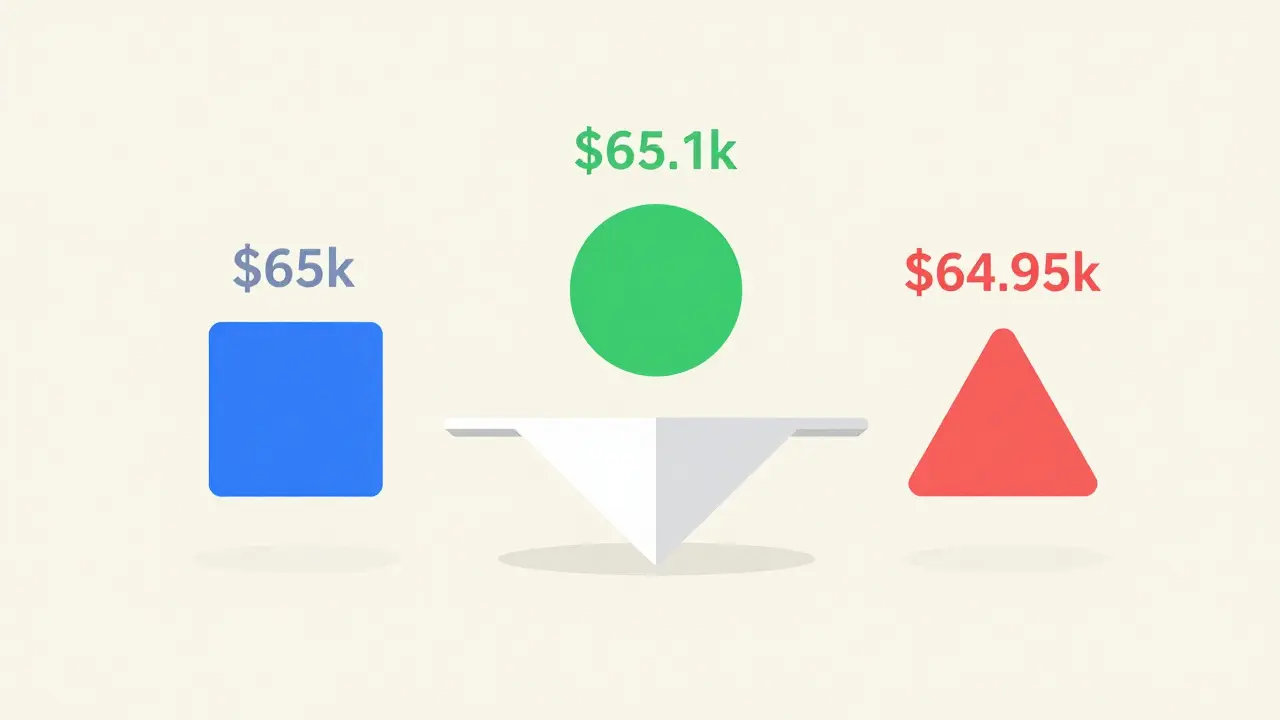
Imagine you want to buy Bitcoin. You check Binance. The price is $65,000. You check Coinbase. It’s $65,100. You check Kraken. It’s $64,950. In the traditional world, these differences vanish quickly. In crypto, they linger. And for traders, those lingering gaps are money left on the table.
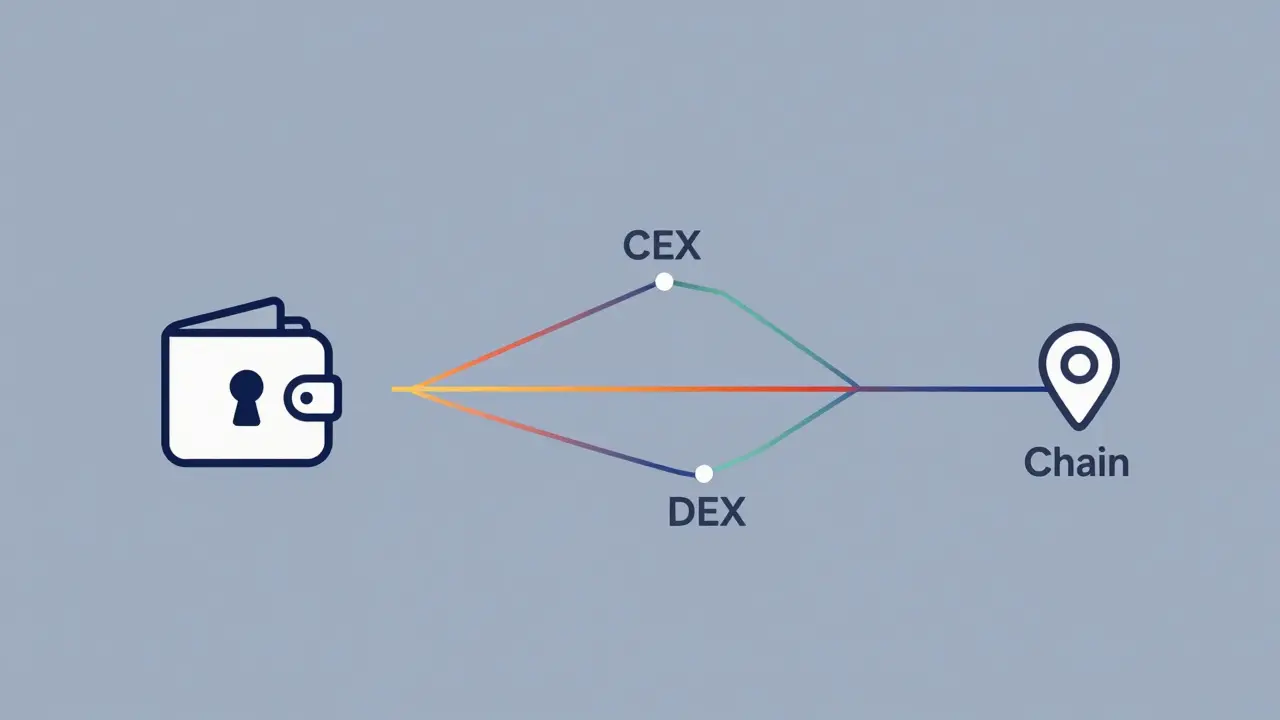
This is the problem Orion Protocol was built to solve. Instead of forcing you to jump between five different exchanges to find the best rate, Orion acts as a middleman that isn’t really a middleman. It aggregates liquidity from centralized exchanges (CEXs) like Binance and KuCoin, and decentralized exchanges (DEXs) like Uniswap, into one interface called the Orion Terminal.
But here is the catch: Orion doesn’t hold your money. It is non-custodial. You connect your wallet, and it routes your trade through smart contracts to get you the best possible price. Sounds too good to be true? Maybe. But in 2026, with over 250,000 active users, it’s a tool many serious traders rely on. Let’s break down whether it actually works, where it fails, and if the ORN utility token is worth your attention.
How Orion Protocol Actually Works
Most people think of an exchange as a place where you deposit funds, click 'buy,' and hope for the best. Orion flips this model. Think of it less like a bank and more like a travel booking site for crypto. When you book a flight on Skyscanner, they don’t own the planes. They just show you the cheapest ticket available across all airlines. Orion does the same for crypto trades.
Here is the technical reality behind the scenes:
- Liquidity Aggregation: Orion connects to major CEXs (Binance, AscendEX, KuCoin) and DEXs. It scans their order books in real-time.
- Intelligent Order Routing: If you want to buy $10,000 worth of ETH, Orion might split that order. It could buy $3,000 on Binance, $4,000 on Uniswap, and $3,000 on Sushiswap to ensure the market price doesn’t slip against you.
- Atomic Swaps: This technology allows cross-chain trading. You can swap tokens between Ethereum and Binance Smart Chain without needing to bridge assets manually, which saves time and reduces risk.
The result? You get the lowest fees and the best execution price automatically. According to user reports from early 2026, traders saved an average of 0.87% in fees compared to executing the same trades separately on individual platforms. That might sound small, but on large volumes, it adds up fast.
The Orion Terminal Interface: A User Experience Test
In March 2026, Orion launched version 1.0 of its public terminal. I spent a week testing it. Here is what stood out.
First, the setup. If you are new to crypto, expect a learning curve. You need a Web3 wallet-MetaMask, Coinbase Wallet, or a hardware wallet like Ledger. Once connected, you deposit funds directly into Orion’s smart contract. This is crucial: you never give Orion custody of your assets. Your keys remain yours. This eliminates the risk of the exchange going bankrupt and running away with your money, a fear every crypto holder knows well.
The interface itself is clean but dense. It includes real-time news feeds, market analysis tools, and trading signals. For a beginner, this can feel overwhelming. One Reddit user, 'DeFiNewbie2025', complained about the complicated staking process for ORN holders, noting it requires technical knowledge beyond basic wallet setup. However, experienced traders praised the 'instant liquidity' feature. The transition from connecting your wallet to seeing aggregated prices takes about 5-7 minutes for pros, but closer to 20-30 minutes for beginners navigating gas fees and network switches.
A major pain point? Customer support. With a non-custodial platform, there is no customer service team to reset your password or reverse a wrong transaction. If you send funds to the wrong address, they are gone. Orion’s support channels include email (with a 48-hour response SLA), Telegram, and GitHub. Reviews indicate response times often exceed 72 hours, leaving users stranded during critical moments.
Orion vs. The Competition: Why Choose It?
You might ask, "Why not just use OpenOcean or 1inch?" Those are great tools, but they have a limitation: they mostly aggregate decentralized exchanges. Orion is unique because it bridges the gap between CEXs and DEXs. This means access to deeper liquidity pools that pure DEX aggregators simply cannot reach.
| Feature | Orion Protocol | OpenOcean | 1inch Network |
|---|---|---|---|
| Liquidity Sources | CEXs + DEXs | DEXs Only | DEXs Only |
| Custody | Non-Custodial | Non-Custodial | Non-Custodial |
| Supported Chains (Early 2026) | Ethereum, BSC | Multi-chain (10+) | Multi-chain (15+) |
| Revenue Streams | 18 distinct streams | Standard fee sharing | Standard fee sharing |
| KYC Required? | No | No | No |
Notice the supported chains row. As of early 2026, Orion primarily supports Ethereum and Binance Smart Chain. While plans exist to expand to five additional networks by Q3 2026, this limits its current appeal compared to rivals like 1inch, which operate on dozens of chains including Polygon, Arbitrum, and Optimism. If you trade heavily on Layer 2 solutions, Orion might not be your best friend yet.
The ORN Token: Utility or Speculation?
Every protocol has a token, and Orion’s is ORN. But what does it actually do? Unlike meme coins that rely on hype, ORN has specific utility within the ecosystem.
- Fee Discounts: Holding ORN reduces transaction fees when trading on the terminal.
- Staking Rewards: Users can stake ORN to earn a share of the protocol’s revenue. Orion claims to have eighteen distinct revenue streams, far more than typical competitors. These rewards are distributed based on daily protocol volume.
- Governance: Holders can vote on future developments, such as which new exchanges or blockchains to integrate.
So, is it a good investment? The data is mixed. As of January 2026, ORN traded around $0.07, showing high volatility with a 6.17% swing in a single day. Analysts at 3Commas projected a modest rise to $0.078 by late 2026, while CoinLore offered a wildly optimistic forecast of up to $57. Take these predictions with a grain of salt. Crypto markets are unpredictable. The real value of ORN lies in its usage. If you plan to trade frequently on Orion, holding the token makes economic sense due to fee rebates. If you are looking for a quick flip, the volatility poses significant risks.

Risks and Limitations You Must Know
No platform is perfect. Before you connect your wallet, consider these downsides:
- Smart Contract Risk: Since Orion uses smart contracts to route trades, any bug or exploit in the code could lead to fund loss. While audits are standard, DeFi hacks still happen.
- Limited Blockchain Support: As mentioned, only Ethereum and BSC are fully operational right now. If you trade Solana or Avalanche assets, Orion won’t help you.
- Complexity for Beginners: Understanding gas fees, slippage tolerance, and wallet connections is mandatory. There is no 'easy mode' button.
- Regulatory Uncertainty: While non-custodial platforms currently fly under some regulatory radars, governments worldwide are tightening rules on DeFi. Future regulations could impact how Orion operates.
Also, beware of scams. There is a separate entity called 'Orion Global Investment' that has been flagged by the UK Financial Conduct Authority. Do not confuse them with Orion Protocol. Always verify you are on the official domain.
Verdict: Who Should Use Orion Protocol?
Orion Protocol is not for everyone. If you are a casual investor who buys Bitcoin once a year and holds it, stick to a simple, regulated exchange like Coinbase. The complexity of Orion offers no benefit to you.
However, if you are an active trader, arbitrageur, or DeFi enthusiast, Orion is a powerful tool. Its ability to aggregate both CEX and DEX liquidity provides pricing advantages that standalone exchanges cannot match. The non-custodial nature gives you peace of mind regarding asset security, provided you manage your private keys correctly.
Just remember: do your own research. Start with small amounts. Test the waters. And always keep your seed phrase offline.
Is Orion Protocol safe to use?
Orion Protocol is non-custodial, meaning it does not hold your funds. Your assets remain in your personal wallet until the moment of trade execution via smart contracts. This reduces the risk of exchange insolvency. However, smart contracts carry inherent risks of bugs or exploits. Always use a hardware wallet like Ledger or Trezor for added security and never share your private keys.
What is the difference between Orion and Uniswap?
Uniswap is a single decentralized exchange (DEX) operating primarily on Ethereum. Orion is an aggregator that pulls liquidity from multiple sources, including Uniswap, other DEXs, and centralized exchanges like Binance. This allows Orion to offer better prices and lower slippage by splitting orders across various venues.
Do I need KYC to use Orion Terminal?
No. Because Orion is a non-custodial decentralized platform, it does not require Know Your Customer (KYC) verification. You simply connect your Web3 wallet (like MetaMask) to start trading. This preserves user privacy but also means there is no account recovery if you lose your wallet credentials.
Which blockchains does Orion support in 2026?
As of early 2026, Orion Protocol fully supports Ethereum and Binance Smart Chain (BSC). The roadmap indicates expansion to five additional blockchain networks by Q3 2026, but support for chains like Solana, Polygon, or Avalanche is not yet live.
How much does it cost to trade on Orion?
Trading costs vary based on network congestion (gas fees) and the specific exchange routing your order. Orion aims to provide the lowest total cost by optimizing routes. Holding the ORN token can further reduce fees through discounts. There are no fixed minimum deposit amounts, but you must cover gas fees for transactions on Ethereum or BSC.