Social Token vs NFT: Key Differences for Creators and Investors
 Sep, 19 2026
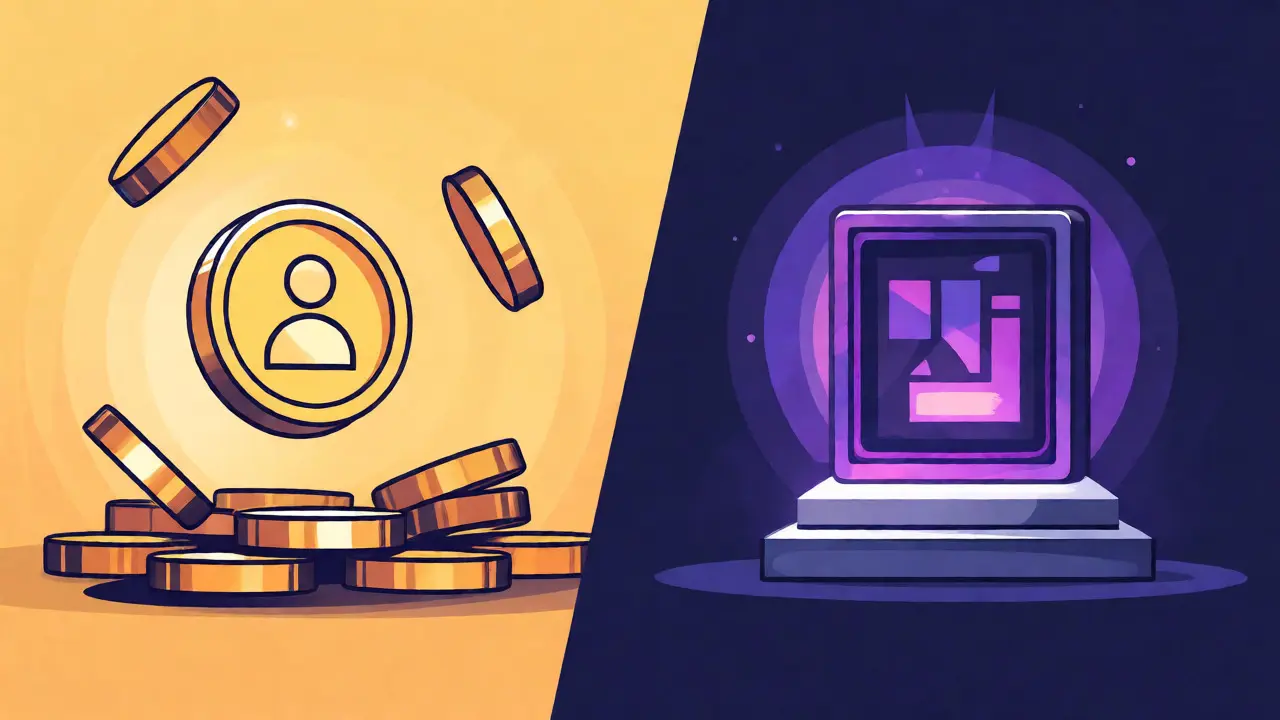
You have probably seen headlines about an artist selling a single digital image for millions or a community buying into a musician’s future earnings. Both stories involve blockchain, but they are telling two very different tales about value. One is about owning a unique piece of history; the other is about belonging to a club. This distinction matters because confusing them can lead to bad investments or failed marketing strategies.
At their core, Social Tokens and Non-Fungible Tokens (NFTs) represent opposite ends of the digital asset spectrum. While both live on blockchains like Ethereum, they serve fundamentally different jobs. Social tokens are about access and community engagement, functioning like digital currency for a specific group. NFTs are about provenance and scarcity, acting as certificates of authenticity for one-of-a-kind items. Understanding this split is the first step to navigating the modern creator economy without getting burned by hype.
The Core Difference: Fungibility vs. Uniqueness
To grasp why these assets behave differently in the market, you need to look at their technical DNA. The biggest divider is fungibility. A Social Token is fungible, meaning every unit is identical to every other unit. If you hold one $OHM token and I hold one $OHM token, we own exactly the same thing. They are interchangeable, just like dollar bills or Bitcoin. This allows for easy trading, clear price discovery, and simple accounting.
NFTs, on the other hand, are non-fungible. Each token has a unique identifier on the blockchain that makes it distinct from all others. You cannot swap your CryptoPunk #1234 for my CryptoPunk #5678 and call it even, because they have different traits, rarity scores, and market values. Built primarily on the ERC-721 standard, NFTs are indivisible and unique. This uniqueness drives their value through scarcity rather than utility alone.
This technical difference dictates how you use them. Social tokens scale easily because they don’t require individual tracking for each unit. NFTs require more complex management because each token needs its own metadata and transaction history. If you are building a loyalty program for thousands of fans, social tokens are efficient. If you are selling limited-edition artwork, NFTs provide the necessary proof of ownership.
What Are Social Tokens? Access Over Ownership
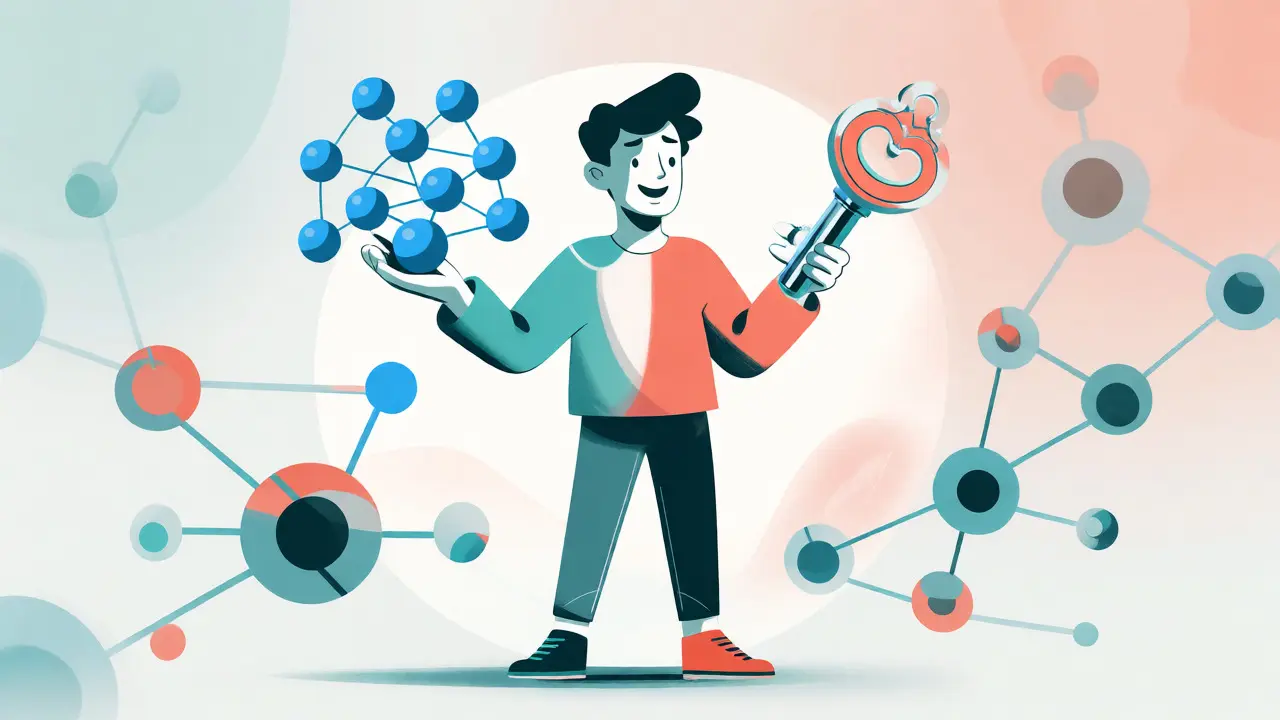
A social token is essentially a key. It unlocks experiences, content, or governance rights within a specific community or personal brand. Unlike traditional cryptocurrencies that aim to be global money, social tokens are local currencies for niche groups. They operate on three main levels: personal, community, and platform.
Personal tokens, often called creator coins, allow individuals like musicians or influencers to monetize their influence directly. For example, when Sting launched his social token, he wasn’t selling a song; he was selling access to his inner circle. Holders might get early ticket sales, exclusive Q&A sessions, or voting power on creative decisions. The value of the token rises with the creator’s popularity and the utility provided to holders.
Community tokens strengthen group bonds. Consider the Shiba Inu ecosystem, where holding certain tokens grants entry to private Telegram groups or Discord channels. These tokens reward participation. If you leave the community, you can sell your token, effectively cashing out your membership. This creates a liquid market for belonging, which is a powerful tool for retaining engaged users.
Platform tokens incentivize behavior on specific networks. They might reward users for posting, referring friends, or creating content. By aligning incentives, platforms can bootstrap growth faster than traditional advertising. The key here is that the token represents a share in the community’s success, not a unique artifact.
What Are NFTs? Proof of Provenance
NFTs solve a problem that didn’t exist before blockchain: proving you own a digital file. Before NFTs, anyone could right-click and save a JPEG. An NFT doesn’t store the image itself; it stores a link to the image and a cryptographic signature verifying who owns the original. This turns digital files into collectibles.
The primary use case for NFTs is art and collectibles. Artists like Beeple sold works for tens of millions because buyers wanted to support the creator and own a piece of digital culture. But the application extends beyond static images. Gaming assets, virtual real estate in metaverses, and music royalties are increasingly tokenized. When you buy an NFT, you aren’t just buying a file; you are buying a status symbol and a claim to rarity.
Value in the NFT space is highly subjective. It depends on factors like the artist’s reputation, the project’s roadmap, and cultural momentum. A rare Bored Ape Yacht Club member isn’t valuable because it does anything functional; it’s valuable because it signals wealth and connection to a prestigious club. This speculative nature makes NFTs volatile but potentially lucrative for early adopters who spot trends.
Side-by-Side Comparison
Choosing between issuing or investing in social tokens versus NFTs depends entirely on your goal. Here is a breakdown of how they stack up against each other across critical metrics.
| Feature | Social Token | NFT |
|---|---|---|
| Fungibility | Fungible (interchangeable) | Non-Fungible (unique) |
| Primary Value Driver | Community utility & access | Rarity & provenance |
| Technical Standard | ERC-20 (usually) | ERC-721 or ERC-1155 |
| Supply Model | Inflationary or fixed supply | Limited edition or 1-of-1 |
| User Experience | Access to services/content | Ownership of asset/status |
| Market Volatility | Tied to creator/community health | Tied to hype/cultural trends |
| Best For | Loyalty programs, DAOs, fan clubs | Art, collectibles, gaming items |
Use Cases: Where Each Asset Shines
Let’s look at real-world scenarios to see which asset fits best. Imagine you are a fitness influencer. You want to reward people who stick to your workout plan. Issuing a social token makes sense. Every month, active members earn tokens. These tokens can be redeemed for personalized coaching calls or merchandise. Because everyone gets the same token, the system is fair and scalable. Managing thousands of users is easy because the tokens are identical.
Now, imagine you are a photographer selling limited prints. You take one photo and decide only ten people will ever own the high-resolution digital version. Minting ten NFTs is the right move. Each buyer gets a unique certificate. They can trade these certificates later, and you might earn royalties on secondary sales. The exclusivity drives the price up. Trying to do this with social tokens would dilute the value because everyone would hold identical units, removing the scarcity premium.
Gaming offers a hybrid example. A game might use social tokens as its in-game currency for everyday purchases (fungible). Simultaneously, it uses NFTs for legendary swords or character skins (non-fungible). Players earn social tokens by playing, but they must buy or trade NFTs to stand out. This dual-layer economy balances accessibility with prestige.
Investment Risks and Regulatory Hurdles
Neither asset class is free from risk. Social tokens face significant regulatory uncertainty. Because they often promise future returns based on the efforts of others, regulators might classify them as securities. If the SEC decides a social token is a security, creators could face fines or forced delistings. Additionally, social tokens rely heavily on the continued activity of the creator. If a celebrity loses relevance, their token can crash to zero quickly.
NFTs carry liquidity risks. While popular blue-chip NFTs trade daily, obscure collections can sit unsold for months. The market is illiquid compared to stocks or major cryptocurrencies. Furthermore, copyright issues remain murky. Owning an NFT usually doesn’t give you commercial rights to the underlying image unless explicitly stated. Many buyers assume they own the IP, leading to disputes.
Scams plague both sectors. Rug pulls are common in social tokens, where developers drain liquidity pools after hyping the coin. In NFTs, wash trading-where sellers buy their own items to inflate prices-is rampant. Always verify smart contract addresses and check holder distributions before committing funds.
Future Outlook: Convergence and Specialization
The lines between these assets are starting to blur. Some projects now issue NFTs that grant social token rewards. For instance, holding a specific NFT might automatically yield monthly social tokens, combining ownership with ongoing income. This hybrid model appeals to investors who want both capital appreciation and yield.
We are also seeing social tokens evolve into more sophisticated instruments. Governance tokens within Decentralized Autonomous Organizations (DAOs) act like social tokens but come with voting power over treasury management. Meanwhile, NFTs are moving beyond art into identity verification and event ticketing. As infrastructure improves, transaction costs drop, making both models viable for mainstream adoption.
For creators, the takeaway is clear: don’t pick a side arbitrarily. Match the tool to the job. Use social tokens to build recurring revenue and deep community ties. Use NFTs to create scarcity and capitalize on viral moments. The most successful digital brands in 2026 will likely leverage both, using NFTs for high-value exclusive drops and social tokens for day-to-day engagement.
Can I convert a social token into an NFT?
Not directly, as they follow different standards (ERC-20 vs ERC-721). However, some platforms offer wrapping services where you lock social tokens to mint a unique NFT representing that stake, or vice versa, though this requires specific smart contract functionality.
Which is easier to launch for a beginner creator?
Social tokens are generally easier to launch because they use standard fungible templates. NFTs require designing unique metadata and managing individual supply limits, which adds complexity. No-code platforms have simplified both, but social tokenomics still require careful planning to avoid inflation.
Do NFTs always appreciate in value?
No. Most NFTs lose value over time. Only a small percentage become "blue chips." Value depends on cultural relevance, utility, and community strength. Without ongoing engagement, an NFT collection can become worthless regardless of its initial hype.
Are social tokens legal tender?
No. Social tokens are not legal tender anywhere. They are privately issued digital assets whose acceptance depends entirely on the issuer and community agreement. Their value is derived from utility and speculation, not government mandate.
How do taxes differ for social tokens and NFTs?
In the US, both are typically treated as property by the IRS. Selling a social token triggers a capital gains tax event. Receiving a social token as income may trigger ordinary income tax. NFT sales are also capital gains events. Always consult a crypto-savvy accountant for your specific situation.