State Control of Crypto Mining in Venezuela: Regulations, Risks & Impact
 Aug, 26 2026
Imagine trying to run a business where the rules change every few months, the regulator might be shut down for corruption, and your power cuts out for half the month. That is the reality for anyone attempting to mine cryptocurrency in Venezuela today. The country holds one of the most unique positions in the global crypto landscape: it has some of the cheapest electricity on earth, yet its government insists on controlling every bit of that digital gold rush. If you are looking at Venezuela as a potential hub for mining or investment, you need to understand how deep the state’s hand really reaches into this industry.
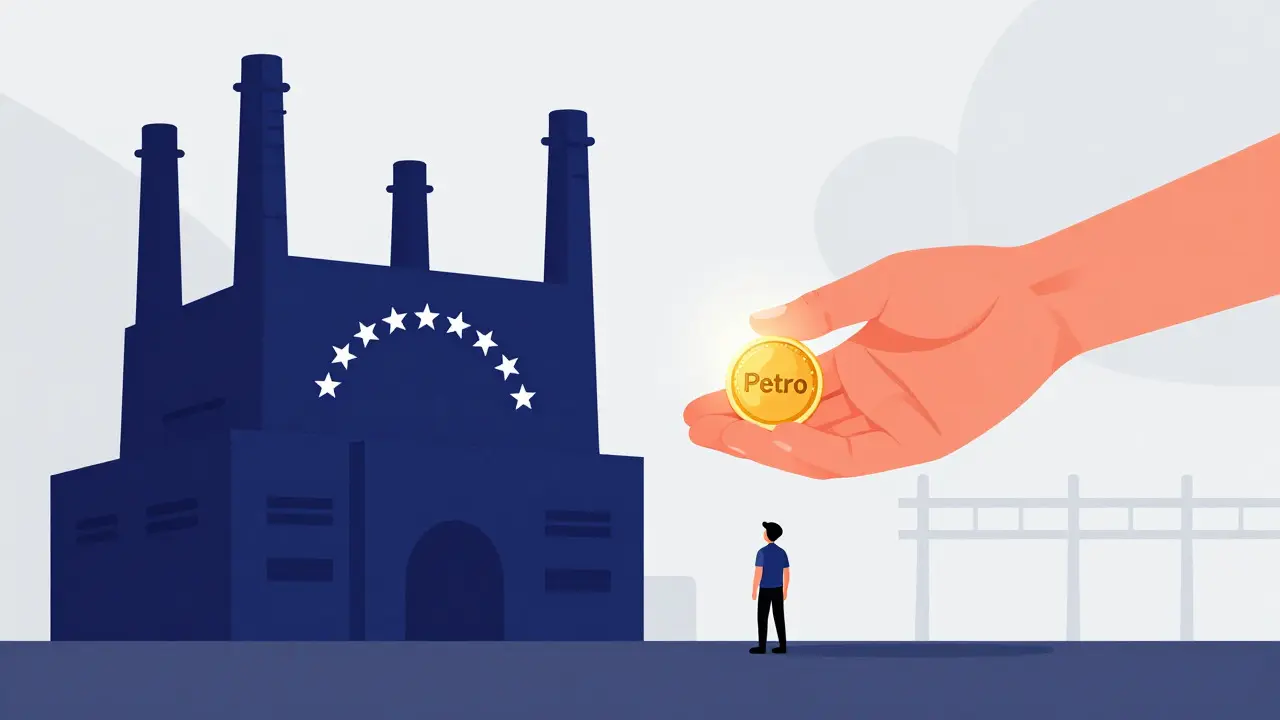
The story doesn’t start with Bitcoin. It starts with the Petro, a state-backed cryptocurrency launched in 2017 by President Nicolás Maduro’s administration. The goal was simple: create an alternative currency backed by oil reserves to bypass international sanctions. But while the Petro struggled to gain traction, the infrastructure built around it laid the groundwork for what would become a heavy-handed regulatory regime. Today, the focus has shifted from issuing a national coin to controlling who gets to mine other coins, like Bitcoin and Ethereum, using the nation's subsidized energy.
The Regulatory Machinery: Who Is Watching?
To understand the restrictions, you have to know who is enforcing them. The primary body here is SUNACRIP (National Superintendence of Cryptocurrencies). Created in 2019 through Presidential Decree No. 4,170, SUNACRIP replaced an earlier agency called SUPCACVEN. On paper, SUNACRIP is supposed to oversee everything related to digital assets: licensing miners, regulating exchanges, and ensuring compliance with anti-money laundering laws. However, the operational reality is messier than the legal documents suggest.
In March 2023, operations were effectively suspended due to a corruption investigation involving the head of the crypto ministry and links to the oil industry. This left a massive gap in oversight. While the agency was reorganized in early 2024 with some private sector involvement through CAVEMCRIP, many observers describe the environment as "chaotic." You are dealing with a regulator that is legally mandated but often operationally paralyzed. For a miner, this means navigating bureaucratic processes that can take 90 to 120 days just to get a license, all while wondering if the rules will change before you finish setting up your rig.
The National Mining Pool: A Mandate, Not a Choice
Here is where the state control gets specific. In most countries, you can join any mining pool you want-F2Pool, Antpool, or whatever offers the best fees. In Venezuela, you don't have that freedom. Since September 2020, regulations have required all licensed mining operations to utilize the state-mandated National Mining Pool (NMP).
The NMP distributes rewards centrally and penalizes operators who try to work outside the system. The idea is to keep data centralized and ensure the state can track exactly how much value is being generated. But miners report significant technical limitations. Connectivity issues and inconsistent reward distribution have reduced operational efficiency by an estimated 15-20% compared to independent pools. It’s a trade-off: you get access to cheap, subsidized energy, but you lose the flexibility and efficiency of the open market. If you ignore the mandate, you risk having your license revoked or your equipment seized, adding another layer of risk to an already volatile environment.

Energy: The Double-Edged Sword
Why does Venezuela care so much about mining? Energy. The country has abundant hydroelectric resources, and because the state subsidizes electricity, the cost for mining operations averages just $0.03 per kWh. Compare that to the global average of $0.08 to $0.12 per kWh, and the advantage looks tempting. This low cost is the main draw for investors and miners alike.
However, cheap energy doesn't mean reliable energy. Despite the abundance of hydro power, the grid is fragile. In 2023, miners reported experiencing 40 to 60 hours of power outages per month. To keep their rigs running, many had to invest in backup generators, which increased their operational costs by roughly 25%. So, while the headline price of electricity is attractive, the total cost of ownership is higher than it appears. Furthermore, because licensed mining centers account for about 10% of the country's total electricity usage, the government keeps a close eye on consumption. If the grid strains, mining is often the first thing to get throttled or banned temporarily to protect residential supply.
Implementation Challenges and Corruption
The path to becoming a licensed miner in Venezuela is not smooth. You must enroll in either the Comprehensive Registry of Cryptoactive Services (RISEC) or the Comprehensive Registry of Miners (RIM), both administered by SUNACRIP. The documentation requirements are strict: proof of electrical capacity (minimum 500kW), identity verification, and full equipment registration. Add in the compliance demands of Ruling No. 044-2021, which mandates digital security protocols and transaction reporting, and you have a steep learning curve.
Then there is the issue of enforcement consistency. In May 2024, the government briefly banned crypto mining entirely, citing "excessive energy consumption concerns" following a corruption probe that had closed facilities in 2023. This sudden shift caught many operators off guard. Reports indicate that over 500 licensed centers were contributing to the economy, but the ban created uncertainty that scared off some foreign capital. Industry analysts note that this kind of unpredictability undermines long-term planning. You can build a profitable model on paper, but if the regulator shuts down for a year or bans the activity overnight, your ROI calculations go out the window.
Economic Impact and Market Reality
Despite the headaches, crypto remains deeply embedded in Venezuelan daily life. With hyperinflation eroding the local bolivar, about 70% of citizens use stablecoins to preserve purchasing power. Blockchain transactions increased by 35% year-over-year in 2024, driven largely by remittances and everyday commerce. The government sees this trend and wants to formalize it rather than let it exist in a gray market.
This leads to initiatives like Conexus, a blockchain-based interbank network managed by the central bank. By December 2025, the plan is to allow banks to custody, transfer, and exchange Bitcoin and stablecoins directly. If this works, it could position Venezuela as a pioneer in integrating crypto into traditional finance. Meanwhile, the country attracted $10.75 million in crypto-focused investments in 2024, with startups securing funding despite the risks. The potential is real, but it comes with the caveat that you are betting on a political system that faces intense domestic and international scrutiny.
| Factor | Venezuela (Licensed) | Global Average |
|---|---|---|
| Electricity Cost | $0.03/kWh | $0.08 - $0.12/kWh |
| Mining Pool Requirement | Mandatory National Mining Pool | Choice of multiple pools |
| Licensing Timeframe | 90-120 days | Varies; often simpler or non-existent |
| Power Reliability | 40-60 hours/month outages | Generally higher uptime |
| Regulatory Stability | Low (frequent changes/bans) | Higher (depending on jurisdiction) |
What This Means for Investors and Miners
If you are considering entering the Venezuelan market, you need to weigh the energy cost savings against the regulatory risk. The $0.03/kWh rate is hard to beat anywhere else, but only if you can maintain continuous operation. The mandatory use of the National Mining Pool adds friction, and the potential for sudden policy shifts means you need a robust contingency plan. Many successful operators treat Venezuela as a short-to-medium-term play, scaling up when conditions are favorable and pulling back when political tensions rise.
For long-term investors, the integration of crypto into the banking sector via Conexus offers a different angle. If the government succeeds in making Bitcoin and stablecoins part of the official financial infrastructure, it could reduce the volatility associated with informal markets. But until then, the sector remains fragmented. The key takeaway is that Venezuela offers high-reward opportunities, but they come with high-risk management requirements. You aren't just managing hardware and software; you are managing geopolitical and regulatory exposure.
Is crypto mining legal in Venezuela?
Yes, but it is heavily regulated. You must obtain a license from SUNACRIP and join the state-mandated National Mining Pool. Unlicensed mining is risky and subject to seizure or fines.
Who regulates crypto in Venezuela?
The National Superintendence of Cryptocurrencies (SUNACRIP) is the primary regulatory body, established in 2019. It oversees licensing, compliance, and market supervision.
How much does electricity cost for miners in Venezuela?
Subsidized rates average around $0.03 per kWh, significantly lower than the global average. However, frequent power outages may require backup generators, increasing total costs.
Can I choose my own mining pool in Venezuela?
No. Licensed miners are required to use the National Mining Pool (NMP). Operating outside this system can lead to penalties or loss of license.
What are the main risks of mining in Venezuela?
Key risks include regulatory instability (sudden bans or rule changes), power grid unreliability, bureaucratic delays in licensing, and broader political uncertainty affecting asset security.