Crypto Regulations: What’s Legal, What’s Banned, and Where You Stand in 2025
When you hear crypto regulations, the legal rules governments set for buying, selling, mining, or using digital currencies. Also known as cryptocurrency laws, these rules decide whether you can trade Bitcoin freely or risk losing your wallet to a government freeze. It’s not about banning crypto—it’s about controlling how it moves, who pays taxes, and who gets punished when things go wrong.
Some countries treat crypto like cash. Others treat it like a weapon. In India, a 1% tax is taken from every crypto trade, no matter how small. That’s not a fee—it’s a trap for small traders. Meanwhile, in Japan, exchanges must store 95% of user funds in offline wallets and get government approval just to operate. Violate that, and you’re out of business. Then there’s Iran, where mining is legal but only if you get government permission and pay for electricity you can’t always afford. Even if you follow every rule, the power cuts might shut you down anyway.
And it’s not just about rules—it’s about survival. In Afghanistan, where banks collapsed and the Taliban banned crypto, families still use USDT and Bitcoin to send money home. No government can stop that when people are starving. In North Korea, IT workers launder billions through crypto to fund weapons. In the U.S., exchanges like Bybit block users with geofencing, and using a VPN to get around it could mean losing your money for good. Crypto regulations aren’t just paperwork—they’re life-or-death decisions for millions.
What you’ll find here isn’t a list of laws. It’s a map of real people caught in them: the Afghan mother sending remittances, the Indian trader paying 1% on every swap, the Iranian miner risking his electricity bill, the Japanese investor watching tokens get reclassified as securities. These aren’t hypotheticals. They’re happening right now. And if you’re holding crypto in 2025, you’re already part of this system—whether you like it or not.
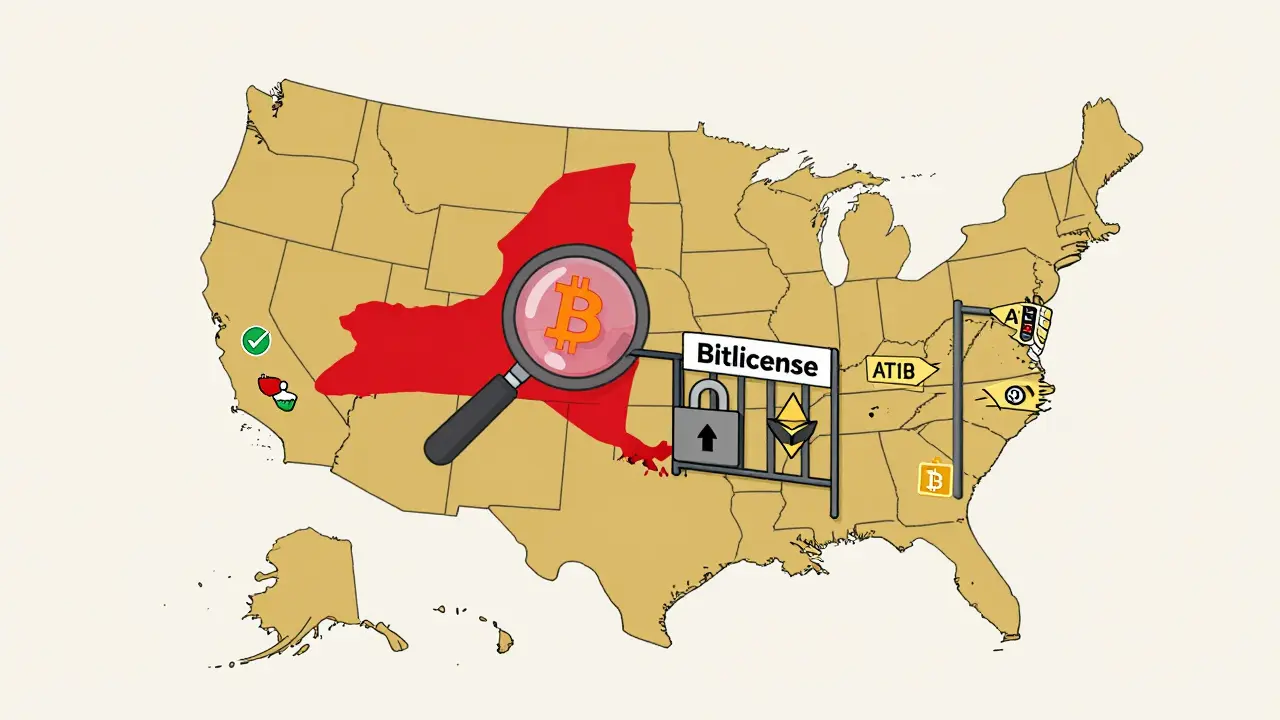
State-by-State Crypto Regulations in the United States: What’s Legal Where in 2025
0 Comments
In 2025, U.S. crypto rules vary wildly by state. New York demands strict licenses, Texas welcomes crypto with open arms, and most states rely on outdated laws. Know where you stand before you trade or build.