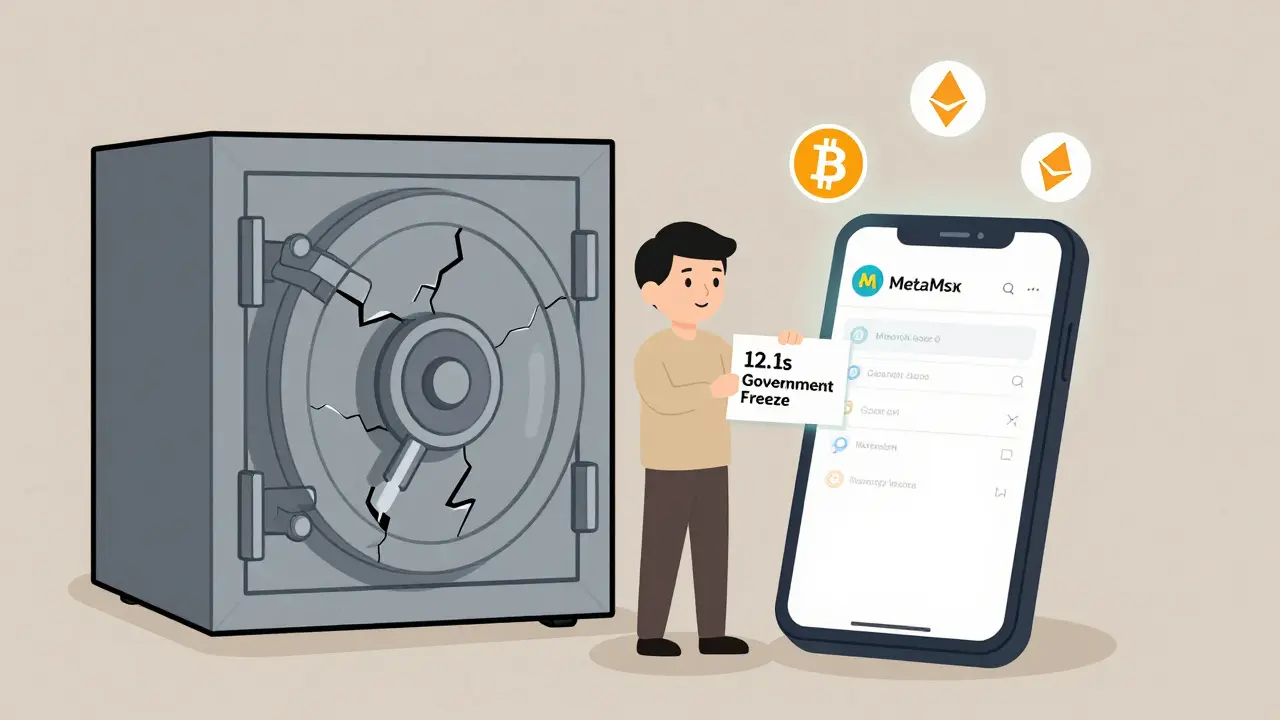
Crypto Wallet Restricted Country: Where You Can't Use Wallets and Why
When you hear crypto wallet restricted country, a nation that legally blocks or severely limits access to cryptocurrency wallets and exchanges. Also known as crypto-blackout zone, it’s not just about bans—it’s about frozen accounts, blocked IPs, and real-world consequences for ordinary people trying to send money home. This isn’t theoretical. In places like Iran, Afghanistan, and parts of Africa, crypto wallets aren’t a luxury—they’re a lifeline. But governments don’t always see it that way.
Some crypto regulations, government rules that control how digital assets can be bought, sold, or stored are clear: Japan forces exchanges to store 95% of funds offline, and India taxes every trade at 1%. Others are silent but deadly: Russia doesn’t outlaw holding crypto, but banks refuse to process crypto-related payments. Then there are the geofencing crypto, technology used by exchanges like Bybit to detect and block users based on their location—a digital gate that locks you out the moment you try logging in from a banned region. These aren’t just technical barriers. They’re survival tools for some, prison walls for others.
What happens when you ignore them? In Iran, mining is legal but power cuts make it pointless. In Afghanistan, families use USDT to feed their kids because banks are gone. In India, the 1% tax on every trade chews into profits—but still doesn’t stop millions from trading. The truth? Most countries don’t jail you for owning crypto. They make it so hard to use that you give up. And that’s exactly what platforms like Bybit count on.
Below, you’ll find real stories from people caught in these restrictions—how they bypassed blocks, what happened when they got caught, and why some of the most popular "free airdrops" are just traps for users in banned regions. No fluff. Just what works, what fails, and what you need to know before you even open a wallet.
Non-Custodial Crypto Wallets in Restricted Countries: How to Stay in Control When Banks Won't Let You
0 Comments
Non-custodial crypto wallets let you control your money without banks or exchanges - crucial in countries where crypto is restricted. Learn how they work, which ones to use, and how to stay safe when no one else can help you.