TradeOgre Shutdown: Canada Seizes $40M in Crypto
 Sep, 21 2026
Imagine logging into your favorite privacy-focused crypto exchange one morning, only to find the website completely dark. No error messages, no maintenance banners-just silence. That’s exactly what happened to users of TradeOgre in July 2025. For months, traders speculated whether the platform had simply gone bust or been hacked. The answer arrived on September 18, 2025, and it was far more dramatic than either scenario: the Royal Canadian Mounted Police (RCMP) had executed the largest cryptocurrency seizure in Canadian history, grabbing CAD$56 million (roughly US$40 million) in digital assets.
This wasn’t just a routine audit. It was a coordinated takedown involving international intelligence sharing and cutting-edge blockchain forensics. If you trade altcoins, use privacy coins like Monero, or care about how regulators are tightening their grip on decentralized finance, this case matters to you. Here is exactly what went down, why TradeOgre fell, and what it means for the future of anonymous trading.
The Anatomy of the Takedown
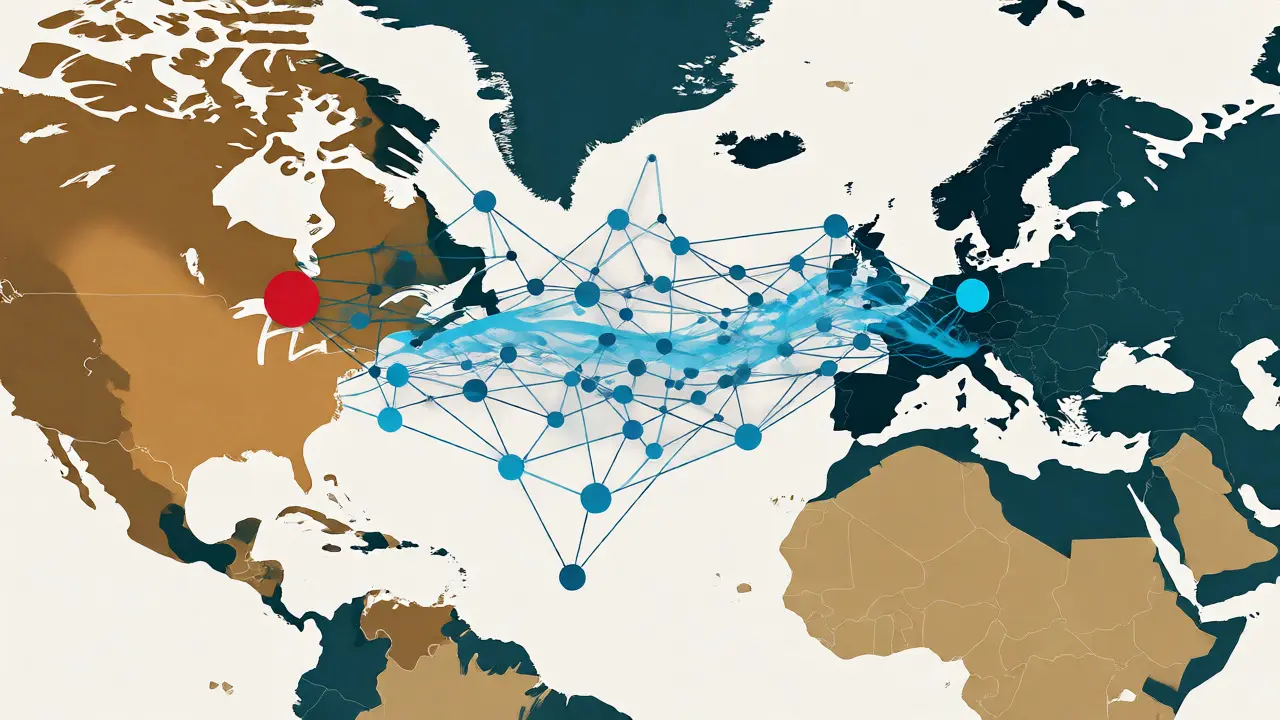
The story didn’t start with a raid; it started with a tip. In June 2024, Europol, the European Union’s law enforcement agency, flagged suspicious activity linked to TradeOgre to Canadian authorities. This triggered a year-long investigation by the RCMP’s Money Laundering Investigative Team (MLIT). They weren’t working alone. To trace funds moving through complex blockchain networks, they partnered with Arkham Intelligence, a leading blockchain analytics firm known for its ability to de-anonymize transactions.
By mid-2025, the pressure mounted. Users noticed that withdrawals were slowing down, and then, suddenly, the entire platform vanished. When the official announcement came in September, the scale was staggering. Investigators seized assets from wallets directly controlled by the exchange. What makes this technically fascinating is how the police documented their control. They embedded specific messages within blockchain transactions declaring RCMP ownership of the assets. This transparent documentation serves as a permanent, immutable record of the seizure, visible to anyone with a block explorer.
Why TradeOgre Was a Regulatory Nightmare
TradeOgre wasn’t trying to be Coinbase or Binance. Launched in 2018 by an unknown founder and registered in the United States, it positioned itself as a haven for privacy. It operated partly as a Tor-based hidden service, appealing to users who wanted to avoid the surveillance state. But here’s the critical failure: despite serving Canadian users and handling significant volume, TradeOgre never registered with FINTRAC (the Financial Transactions and Reports Analysis Centre of Canada).
Under Canadian law, any entity offering money services must register with FINTRAC and implement strict Know Your Customer (KYC) protocols. TradeOgre skipped both. You could create an account, deposit Bitcoin or Monero, and trade without ever uploading a passport photo or verifying your address. While this appealed to libertarians and privacy advocates, it created a perfect environment for money laundering. Without identity verification, tracking illicit flows becomes incredibly difficult for traditional banks, but not impossible for specialized blockchain analysts.
| Feature | TradeOgre | Compliant Exchange (e.g., Kraken CA) |
|---|---|---|
| KYC Requirements | None | Mandatory ID Verification |
| Regulatory Status | Unregistered MSB | Registered with FINTRAC |
| Privacy Focus | High (Tor support, Altcoin focus) | Moderate (Standard Web Interface) |
| Asset Type | Niche Altcoins & Monero | Major Cryptocurrencies |
The Role of Blockchain Forensics
Critics often argue that cryptocurrencies like Monero offer true anonymity. The TradeOgre case proves otherwise-at least when centralized exchanges are involved. Even if the coin itself hides the sender and receiver on-chain, the exchange acts as a choke point. Once fiat currency enters or leaves the system, or when assets move between different platforms, patterns emerge.
Arkham Intelligence used heuristic clustering and transaction graph analysis to map out TradeOgre’s hot and cold wallets. By correlating deposit addresses with user behavior and external data points, they could identify which clusters belonged to the exchange infrastructure. This allowed the RCMP to freeze and seize funds effectively. The lesson? Pseudonymity is not invisibility. If you hold your coins on a centralized exchange, even a "privacy" one, the exchange holds the keys-and potentially the evidence against you.
What Happens to the Funds?
The CAD$56 million seized isn’t just sitting in a government vault waiting for interest. In cases like this, the assets are typically held pending legal proceedings. If the court determines the funds originated from criminal activities-such as drug trafficking, fraud, or sanctions evasion-the government can forfeit them. These proceeds often go toward funding further law enforcement efforts or returning to victims, depending on the specific legal framework applied.
Interestingly, TradeOgre has remained silent. There have been no press releases from the founders, no lawsuits filed to challenge the seizure, and no updates on user refunds. This silence suggests two possibilities: either the operators fled to jurisdictions with weaker extradition treaties, or they lack the legal standing to contest the comprehensive evidence gathered by the RCMP and Europol. For users, this is bad news. Historically, getting funds back from seized non-compliant exchanges is a long, uncertain road.
Implications for Privacy-Focused Traders
If you live in Canada or trade on platforms serving Canadians, the regulatory landscape just got sharper. The TradeOgre shutdown sends a clear message: operating without FINTRAC registration is a high-risk gamble. Authorities are no longer just fining exchanges; they are dismantling them entirely.
This event also highlights the growing collaboration between global agencies. Europol’s initial tip led to a Canadian action, supported by private-sector tech firms. This tripartite cooperation (public-public-private) creates a net that is much harder to slip through than in previous years. For developers building new DeFi protocols or CEXs, compliance is no longer optional-it’s survival.
Key Takeaways
- Scale Matters: A $40 million seizure signals that regulators are targeting major players, not just small scams.
- Tech Works: Blockchain analytics tools like Arkham can pierce the veil of pseudonymous transactions.
- Silence is Golden (for Police): The lack of response from TradeOgre indicates strong evidentiary backing.
- Compliance is Cheap Insurance: Registering with bodies like FINTRAC prevents catastrophic asset freezes.
Can I get my money back from TradeOgre?
It is currently unclear. Since the assets were seized by law enforcement rather than lost due to insolvency, recovery depends on legal outcomes. Users may need to file claims through the court-appointed administrator handling the seized estate, a process that can take years.
Was TradeOgre illegal?
Operating without KYC isn't always strictly "illegal" in every jurisdiction, but failing to register with FINTRAC while serving Canadian customers violates Canadian financial regulations. The seizure suggests the authorities found sufficient evidence of money laundering or other criminal misuse to justify confiscation.
Does this mean Monero is dead?
No. Monero remains active on compliant exchanges and decentralized swaps. However, its availability on major centralized platforms may shrink as exchanges become more cautious about delisting privacy coins to satisfy regulators.
Who investigated TradeOgre?
The Royal Canadian Mounted Police (RCMP) led the operation, utilizing intelligence from Europol and forensic analysis from Arkham Intelligence.
How much was seized?
Approximately CAD$56 million, which equates to roughly US$40 million at the time of the seizure.