Using Crypto for Imports in Iran: How Bitcoin Enables Trade
 Oct, 11 2026
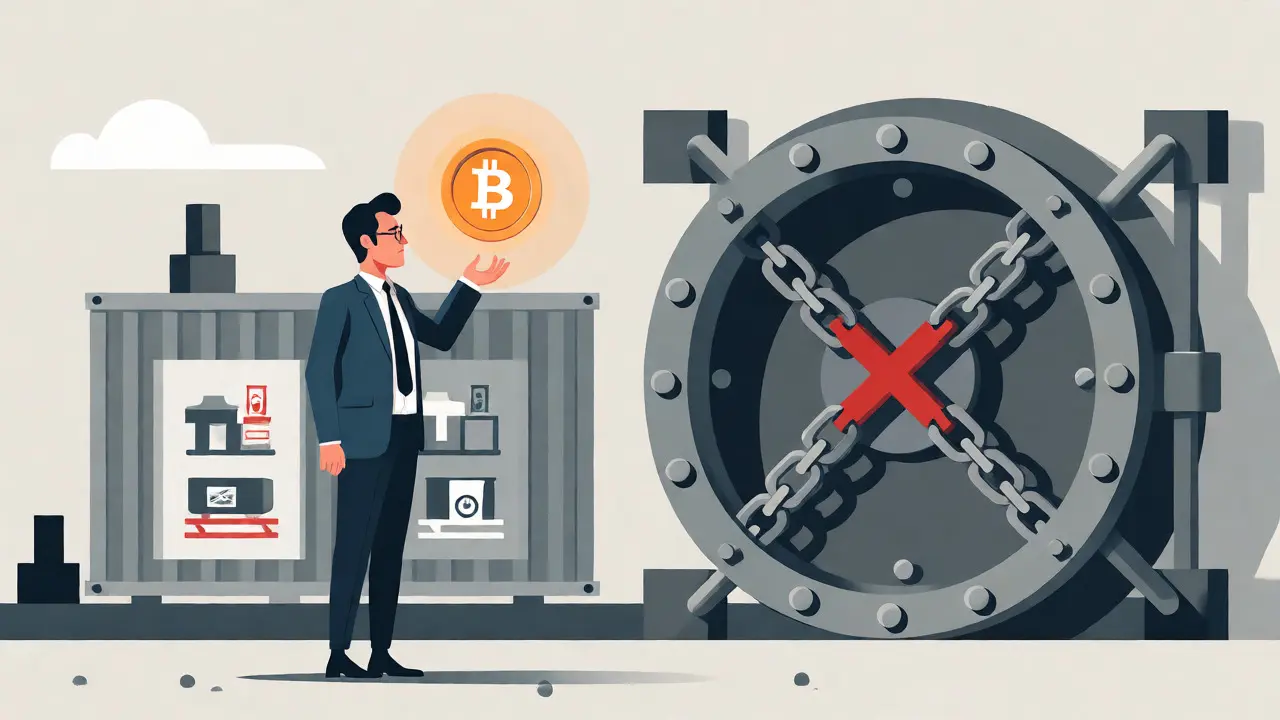
Imagine trying to buy industrial machinery from Germany or medical supplies from China, but your bank transfer gets blocked before it even leaves the country. That is the daily reality for Iranian importers navigating a web of international sanctions. Traditional banking channels are often dead ends, forcing businesses to look elsewhere. Enter cryptocurrency. While headlines often focus on speculation and price swings, the real story in Iran is about utility. The Islamic Republic has quietly built one of the world's most sophisticated systems for using Bitcoin as a settlement layer for international trade, bypassing the US dollar entirely.
This isn't just a hack; it's a state-backed strategy. Since legalizing mining in 2018, Iran has transformed its excess energy into digital gold, then into imported goods. But how does it actually work? And why is the Central Bank of Iran (CBI) so strict about where those coins go? If you're a trader, an investor, or just curious about geopolitical finance, understanding this mechanism reveals how money moves when traditional pipes are cut off.
The Sanctions Workaround: Why Crypto Matters for Iran
For years, Iran’s access to the global financial system was severely restricted. SWIFT codes were revoked, and correspondent banking relationships dried up. This created a massive bottleneck for imports. You could have the goods ready in Rotterdam or Dubai, but if you couldn’t pay for them in dollars or euros, they didn’t ship. Cryptocurrency offered a neutral, borderless alternative. Unlike fiat currency, which relies on trust in specific national banks, Bitcoin operates on a decentralized ledger that doesn’t care about political borders.
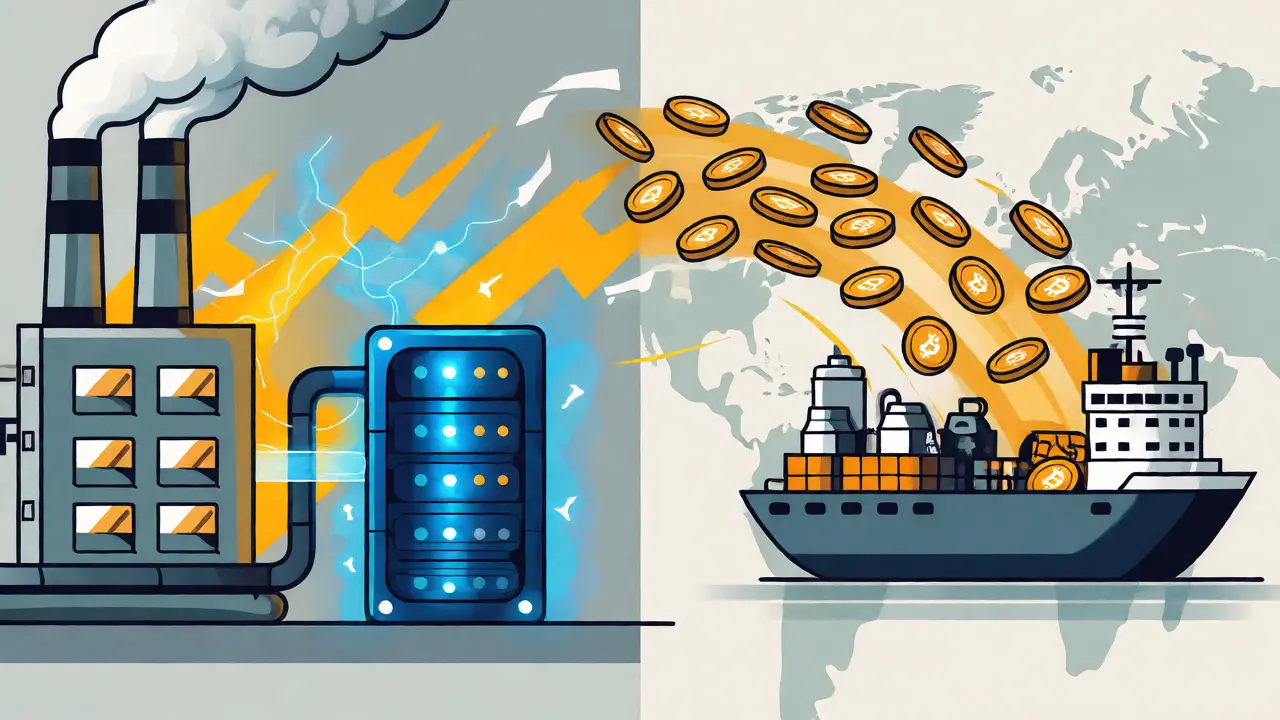
The shift wasn't immediate. Initially, crypto was largely speculative. But by 2023, the government officially authorized the use of cryptocurrencies for cross-border trade settlements. This pivot recognized Bitcoin not as a toy, but as a tool for economic survival. By converting domestically produced energy-specifically natural gas and electricity-into Bitcoin, Iran effectively exports value without needing a traditional buyer willing to risk sanctions exposure. It turns local resources into globally accepted digital assets.
How the Dual Regulatory Framework Operates
You might wonder, "If they use Bitcoin for imports, can I buy coffee with it in Tehran?" The answer is no. Iran maintains a strict dual regulatory framework. Domestically, paying for goods and services with cryptocurrency is prohibited. The Rial remains the sole legal tender for internal transactions. This prevents capital flight and keeps monetary policy under control. However, for external trade, the rules flip. Licensed miners can sell their mined coins to settle import invoices.
This system is tightly controlled by multiple authorities. The Central Bank of Iran (CBI) oversees all authorized crypto transactions, ensuring that every coin leaving the country corresponds to a verified import order. The Ministry of Industry approves the import of mining equipment, while the Iran Power Generation Company allocates electricity quotas. It’s a closed loop. You mine Bitcoin using subsidized or allocated power, you register the output, and you sell it through state-approved pools. The proceeds then fund the import of raw materials, technology, or consumer goods.
Mining Infrastructure: From Gas Flares to Digital Assets
Where does all this Bitcoin come from? Iran has become a global mining powerhouse, producing nearly five percent of new bitcoins at its peak around 2021. Much of this capacity is driven by state-linked entities, including those affiliated with the Islamic Revolutionary Guard Corps (IRGC). These operations aren't just small garages; they are industrial-scale farms located in special economic zones or on protected bases.
A prime example is the 175-megawatt facility in Rafsanjan, Kerman province. This joint venture between IRGC-linked enterprises and Chinese investors leverages Iran’s rock-bottom electricity tariffs. The logic is simple: Iran has abundant energy resources that are difficult to export due to sanctions. Instead of piping gas across borders, they convert that energy into computational work, producing Bitcoin. This process, often called "energy arbitrage," allows Iran to monetize stranded energy assets. By 2022, over 10,000 licensed mining farms were operating, supported by roughly 90 cryptocurrency exchanges, though public trading remains heavily regulated.
The Import Process: Step-by-Step Execution
So, how does a business actually execute a crypto-based import? It’s not as simple as sending a wallet address to a supplier. The process involves several layers of compliance and technical infrastructure.
- Import Order Approval: The importer secures approval from the Ministry of Industry for the goods they wish to bring in.
- Crypto Allocation: The Central Bank of Iran authorizes a specific amount of cryptocurrency to be used for the transaction. This ensures the outflow matches the approved import value.
- Transaction Settlement: The payment is made using digital assets, often via platforms like Binance, which has processed billions in Iranian transactions since 2018. Smart contracts may facilitate parts of this exchange.
- Verification and Shipping: Once the supplier confirms receipt of funds, the goods are shipped. Proof of payment is submitted to Iranian customs to clear the cargo.
This method bypasses the need for US-dollar clearinghouses. For countries like Russia, China, or Turkey, which also face varying degrees of financial friction, this creates a bilateral trade network independent of Western banking dominance. In fact, Iran signed a bilateral agreement on cryptocurrency cooperation with Russia in 2018, laying the groundwork for these direct trades.
Challenges: Volatility, Energy, and Enforcement
Despite the innovation, the system faces significant headwinds. Price volatility is the obvious elephant in the room. If Bitcoin drops 20% between the time an importer locks in a deal and the time they settle, who eats the loss? To mitigate this, many transactions likely use stablecoins or immediate conversion mechanisms, though the primary asset discussed remains Bitcoin.
Then there’s the energy crisis. Mining consumes vast amounts of electricity. During peak summer heat, Iran has experienced debilitating blackouts, leading to temporary bans on mining in 2021. Critics argue that state-affiliated miners, sometimes described as a "crypto cartel," divert national resources for profit while households suffer. The government tries to balance this by enforcing AML (Anti-Money Laundering) and KYC (Know Your Customer) rules, requiring licensed miners to document every coin movement. Illegal miners using subsidized household electricity have faced arrests, showing the state’s intent to maintain control.
| Feature | Traditional Banking | Crypto-Based Settlement |
|---|---|---|
| Primary Currency | USD/EUR | Bitcoin/Stablecoins |
| Clearing Path | SWIFT/Correspondent Banks | Blockchain/Digital Exchanges |
| Sanctions Risk | High (Blocked Transfers) | Lower (Decentralized Ledger) |
| Regulatory Oversight | Strict International Compliance | CBI Controlled Domestic Outflow |
| Speed | Days to Weeks | Hours to Days |
The Role of State Actors and Geopolitics
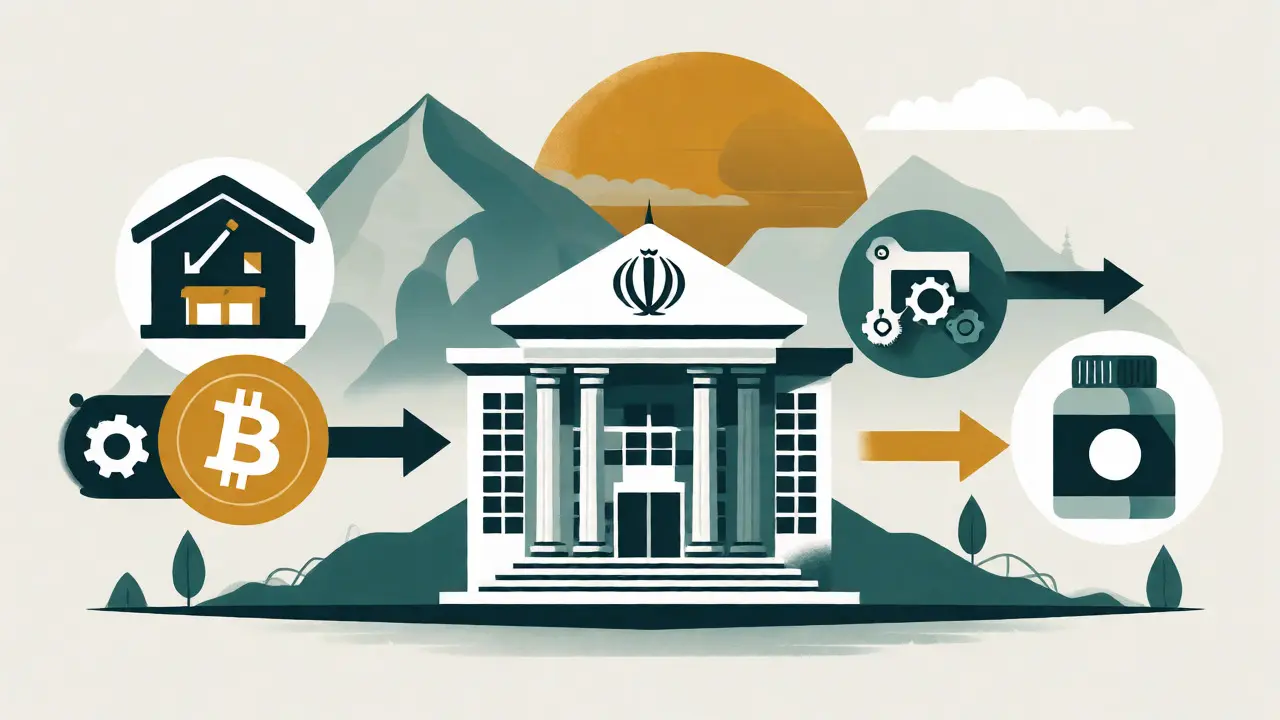
It’s impossible to discuss Iran’s crypto economy without mentioning the Islamic Revolutionary Guard Corps (IRGC). Reports indicate that by 2019-2020, influential power brokers moved aggressively into mining. They partnered with Chinese companies to build massive facilities, securing dedicated power feeds and minimal scrutiny. This consolidation means that much of the Bitcoin generated isn't floating freely in the market; it’s captured by state-aligned entities to serve national strategic goals.
This centralization helps the government manage capital flows. By controlling the supply side (mining) and the demand side (import licenses), the CBI can prevent sudden shocks to the Rial. It’s a form of digital mercantilism: export energy, import goods, keep the wealth within sanctioned-friendly networks. The $4.18 billion worth of cryptocurrencies leaving Iran by 2024 highlights the scale of this operation, representing a 70% increase from previous years.
Future Outlook: Can Crypto Sustain Trade?
As we move further into 2026, Iran continues to refine this model. The sector is forecasted to generate significant revenue, potentially reaching $1.9 billion annually. But sustainability depends on infrastructure. The power grid strain is real. If blackouts worsen, mining capacity-and thus the ability to generate settlement assets-could drop.
Furthermore, the global regulatory environment is tightening. As more countries scrutinize crypto flows for sanctions evasion, Iran’s methods may face increased pressure. Yet, the precedent is set. Iran proved that a nation can operate outside the dollar-dominated system using digital assets. For other sanctioned economies, Iran serves as a case study in resilience. It shows that while crypto isn't a magic wand-it brings volatility and technical complexity-it offers a viable lifeline when traditional doors slam shut.
Can ordinary Iranians use Bitcoin for daily purchases?
No, domestic payments using cryptocurrency are prohibited by the Central Bank of Iran. The Rial remains the only legal tender for buying goods and services inside the country. Crypto is primarily used for international trade settlements and investment purposes among licensed entities.
Why did Iran legalize Bitcoin mining?
Iran legalized mining in 2018 to monetize its surplus energy production. By converting excess electricity into Bitcoin, the country could generate foreign currency equivalents without relying on traditional oil exports, which are vulnerable to sanctions and price fluctuations.
How does the Central Bank control crypto imports?
The Central Bank of Iran (CBI) requires all crypto transactions for imports to be pre-approved. Miners must sell their coins through state-approved pools, and the proceeds are directed toward specific import orders. This ensures that the outflow of digital assets matches the inflow of physical goods.
What role do Chinese companies play in Iran's mining sector?
Chinese companies provide essential hardware (ASIC miners) and technical expertise. Many large mining farms in Iran are joint ventures involving Chinese investors and Iranian state-linked entities, leveraging Iran's low energy costs and China's manufacturing capabilities.
Is crypto mining causing power outages in Iran?
Yes, large-scale mining operations contribute significantly to the national electricity load. During periods of high demand, such as summer heatwaves, the government has temporarily banned mining to prioritize residential and industrial power needs, highlighting the tension between crypto revenue and grid stability.