What Is CAT COIN (CAT)? A 2026 Reality Check on the Meme Token
 Jul, 3 2026
You’ve probably seen it pop up in a chat group or on a low-tier exchange list: CAT COIN (CATS), a cat-themed cryptocurrency token that promises community fun but delivers near-zero liquidity and high risk. It sounds cute. It sounds simple. But if you are looking at CAT COIN in 2026 to make money, you need to stop and look at the data before you send even a single dollar.
The reality is stark. CAT COIN is not a rising star; it is a cautionary tale of what happens when a meme coin loses its momentum. With a market capitalization hovering around $390,000 and effectively zero trading volume on major exchanges, this token sits in the graveyard of digital assets. This guide breaks down exactly what CAT COIN is, why it struggles to trade, and whether there is any future left for this feline-focused project.
The Identity Crisis: Which CAT Are You Looking At?
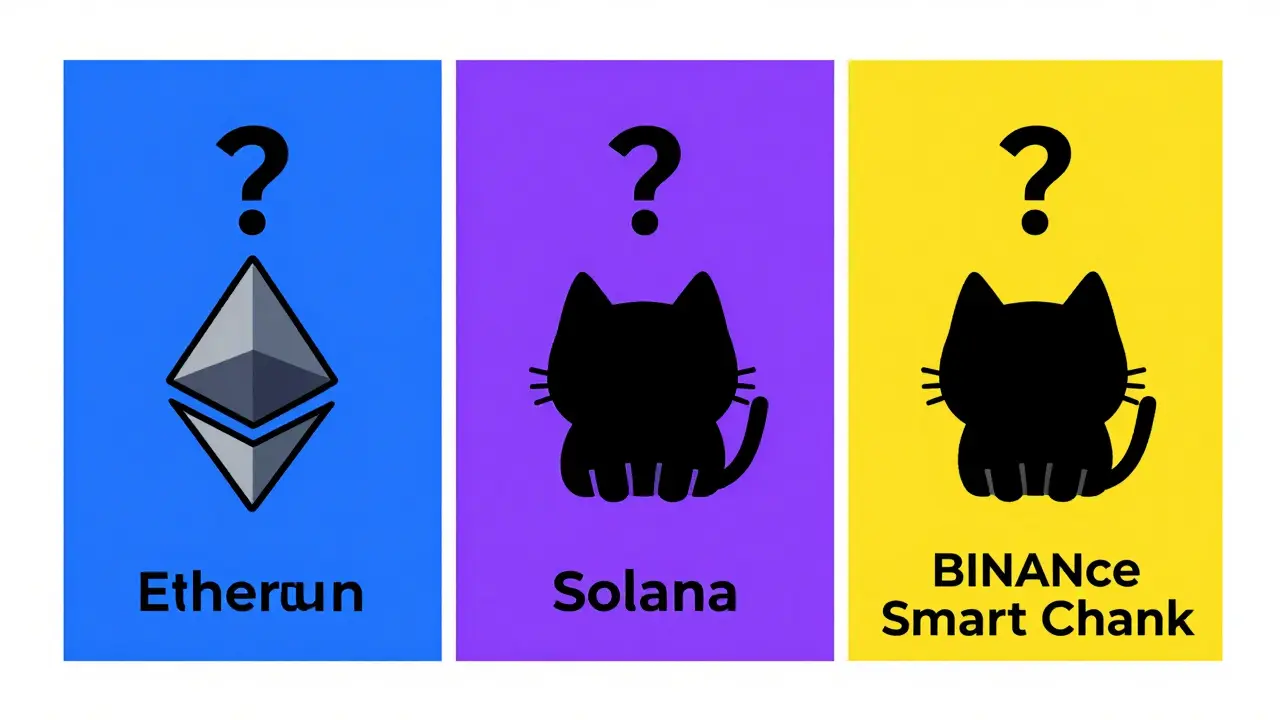
Before we dive into the numbers, we have to address the biggest problem with CAT COIN: confusion. In the wild west of meme coins, speculative cryptocurrencies based on internet jokes rather than utility, names get reused constantly. When people search for "CAT COIN," they might be looking at three completely different things.
- CATCOIN (CATS): The most prominent version, originally created by Miaoshi Nekomoto. This is an ERC-20 token built on the Ethereum blockchain. It has a circulating supply of nearly 1 quadrillion tokens (987.56 trillion).
- Solana-based CAT: Documentation from platforms like CoinSwitch references a separate token built on the Solana network. This version has no significant price history or volume.
- Binance Smart Chain Catcoin: Some older records point to a version on BSC, further muddying the waters for new investors.
This fragmentation is dangerous. If you buy the wrong one, you aren’t just buying a bad investment; you might be buying a token that doesn’t exist on the exchange you think it does. Most serious analysis focuses on the Ethereum-based CATS token because it has the longest track record, even if that track record is mostly silence.
The Numbers Don’t Lie: Liquidity Is Dead
Let’s talk about the hard data. As of late 2025 and early 2026, CAT COIN ranks #6939 by market capitalization. That puts it deep in the lower tiers of the cryptocurrency world. To put that in perspective, Bitcoin’s market cap is over $2 trillion. CAT COIN’s is roughly $390,000. You would need 5,500 CAT COIN markets combined to equal the value of one Bitcoin market.
But market cap is only half the story. The real killer is trading volume, the total amount of an asset bought and sold in a specific time period. According to CoinMarketCap and other aggregators, the 24-hour trading volume for CATS is consistently reported as $0. What does this mean for you? It means if you try to sell your tokens, there may literally be no one to buy them. Your order could sit there forever, unfilled, while the price drops to nothing.
| Metric | CAT COIN (CATS) | Dogecoin (DOGE) | Shiba Inu (SHIB) |
|---|---|---|---|
| Market Cap | $389,690 | $18.5 Billion | $13.2 Billion |
| 24h Volume | $0 | High Billions | High Billions |
| Ranking | #6939 | Top 10 | Top 15 |
| Liquidity Risk | Critical | Low | Low |
The table above shows the chasm between CAT COIN and established meme coins. Dogecoin and Shiba Inu have massive communities, active development, and deep liquidity pools. CAT COIN has none of these. Its all-time high was back in February 2022, when it hit $0.000076921. Since then, it has drifted downward, with recent displays showing prices so low they are essentially fractions of a penny.
Why Did CAT COIN Fail to Take Off?
CAT COIN launched with a clear identity: a community-driven token for cat lovers. Created by Miaoshi Nekomoto, it aimed to capture the same viral energy that propelled Dogecoin to fame. However, several critical factors prevented it from sustaining growth.
1. Lack of Utility: Unlike projects that build ecosystems, games, or payment systems, CAT COIN remained purely speculative. There was no whitepaper detailing a long-term roadmap, no governance structure, and no tangible product. In the crypto world, memes fade fast unless they evolve into something more.
2. Developer Abandonment: By 2023, signs of life from the original team disappeared. The official website went offline, archived only by the Wayback Machine after March 2022. GitHub repositories showed no commits. Without developers maintaining the code or marketing the brand, interest evaporated.
3. Market Saturation: The meme coin sector is brutally competitive. In 2025 alone, DappRadar documented over 1,200 cat-themed tokens. Why choose CAT COIN when newer, shinier tokens with active Telegram groups and influencer endorsements appeared daily? Investors moved their attention-and their money-to projects with visible activity.
4. Technical Fragmentation: As mentioned earlier, the existence of multiple tokens with similar names on different blockchains (Ethereum, Solana, BSC) confused potential buyers. Trust erodes when users can’t verify which token is the "real" one. This ambiguity killed institutional interest and deterred casual investors.
Is CAT COIN a Scam?
This is the question everyone asks. Technically, CAT COIN is not a classic "rug pull" where developers steal funds and disappear overnight. The contract exists, the tokens are distributed, and the blockchain records are transparent. However, calling it "not a scam" doesn’t make it safe.
In the eyes of regulators and analysts, CAT COIN fits the profile of a dead asset, a cryptocurrency with no trading activity, no development, and no recovery potential. Pseudonymous analyst 'MemeAudit' noted in November 2025 that tokens with zero volume for extended periods are "effectively dead assets." The SEC’s 2025 guidance also flagged tokens under $1 million market cap with zero volume as "high-risk unregistered securities," adding legal uncertainty for holders.
User experiences reflect this stagnation. On forums like CryptoSlate, users report trying to sell CATS on exchanges like Gate.io only to find their orders never fill. One user posted in November 2025: "Tried to sell my CATS on Gate.io but order never filled despite showing $0.00009 price - seems completely illiquid." This isn’t a glitch; it’s a lack of buyers. When no one wants to buy, the price becomes meaningless.
How to Check If a Meme Coin Is Still Alive
If you are curious about other low-cap tokens, don’t repeat the CAT COIN mistake. Use this checklist to evaluate any meme coin before investing:
- Check Trading Volume: Look at the last 24 hours and 7 days. If volume is zero or near-zero, walk away. Liquidity is oxygen for a crypto project.
- Verify Social Activity: Visit the official Telegram, Discord, or Twitter. Are posts recent? Are real people discussing the project, or is it just bots posting "To the moon!"? If the last update was months ago, it’s likely abandoned.
- Examine the Contract: Use tools like Etherscan (for Ethereum) or Solscan (for Solana). Check who holds the majority of tokens. If one wallet holds 50%+ of the supply, the risk of a dump is extreme.
- Look for Development: Is there a GitHub repository with recent commits? Is there a working website? Projects without code updates are just hollow shells.
- Compare Market Cap: If a token is ranked below #5,000, it is in the danger zone. Only top-tier meme coins survive bear markets.
What Should You Do With Your CAT COIN?
If you already hold CAT COIN, here is the hard truth: your options are limited. Because trading volume is zero, you cannot simply sell on major exchanges like Binance or Coinbase-they don’t even list it. You might find it on smaller platforms like Gate.io, Hotcoin, or MEXC Global, but as users have reported, orders often go unfilled.
Your best move is to treat it as a sunk cost. Do not invest more money hoping for a pump. Do not fall for scams promising to "buy back" your tokens. Instead, learn from this experience. The crypto market rewards speed, community, and utility. CAT COIN had none of these in the long run.
For security, if you still hold the tokens in a software wallet, consider moving them to a hardware wallet like Trezor or Ledger. While this won’t increase their value, it protects your private keys from phishing attacks. Just remember: holding a dead token securely doesn’t change its fundamental worthlessness.
The Future of Cat-Themed Coins
While CAT COIN itself appears defunct, the love for cats in crypto isn’t going anywhere. Newer projects like Popcat, a popular cat-themed meme coin on Solana with higher liquidity and others have emerged with better marketing and active communities. These projects benefit from lessons learned by failures like CAT COIN.
The key difference? Active engagement. Successful meme coins maintain constant social media presence, partner with influencers, and sometimes integrate into decentralized finance (DeFi) protocols. CAT COIN lacked this ecosystem. Without a roadmap or community drive, it faded into obscurity.
As we move through 2026, expect stricter regulations on low-cap tokens. The SEC and other global bodies are cracking down on unregistered securities. Tokens like CAT COIN, with no clear utility and zero transparency, are prime targets for regulatory scrutiny. This makes them even riskier for retail investors.
Is CAT COIN (CATS) available on Binance or Coinbase?
No. CAT COIN is not listed on major centralized exchanges like Binance, Coinbase, or Kraken due to its low market cap and lack of liquidity. It may appear on smaller platforms like Gate.io or MEXC, but trading activity is virtually non-existent.
Can I still buy CAT COIN in 2026?
Technically, yes, if you find an exchange that lists it. However, buying it is highly risky. With zero trading volume, you may not be able to sell your tokens later. Most experts advise against purchasing dead or illiquid meme coins.
Why is the price of CAT COIN so low?
The price is low because of extreme oversupply (nearly 1 quadrillion tokens) and lack of demand. Additionally, the absence of trading volume means the displayed price is often inaccurate or theoretical. No real market forces are supporting its value.
Is CAT COIN a scam?
It is not a traditional scam where developers stole funds directly. However, it is considered a "dead asset" with no development, no community, and no liquidity. Investing in it carries extreme risk of total loss, making it functionally similar to a failed project.
What happened to the CAT COIN team?
The original creator, Miaoshi Nekomoto, launched the token for the cat community. However, by 2023, the team became inactive. The official website went offline, and there have been no updates or communications since, indicating the project was abandoned.