What is Lolcat (LOLCAT) Crypto Coin? A Guide to the Nostalgic Meme Token
 Aug, 30 2026
You remember the lolcats. That era of internet history where fluffy felines with broken English captions ruled message boards and early social media feeds. Now, imagine if that specific slice of digital nostalgia got wrapped up in a blockchain token, traded on decentralized exchanges, and valued at fractions of a cent. That is Lolcat (LOLCAT), a meme cryptocurrency that attempts to bridge the gap between early Bitcoin forum culture and today’s speculative meme coin frenzy.
But here is the catch: Lolcat isn’t just one thing. Depending on where you look, it might be a Solana SPL token, an Ethereum ERC-20 asset, or a Base layer-2 experiment. This fragmentation is typical for micro-cap meme coins, but it makes understanding what you are actually buying tricky. Are you investing in a community-driven movement honoring the first meme cat post on Bitcointalk from 2010, or are you chasing liquidity in a thin market with volatile swings?
| Metric | Value / Range | Note |
|---|---|---|
| Max Supply | 1,000,000,000 tokens | Fixed supply across most variants |
| Market Cap | $40 - $350,000+ | Extremely volatile; varies by chain |
| Price Range | $0.00001 - $0.0769 | Depends heavily on venue and date |
| Chains | Solana, Ethereum, Base | Multiple deployments exist |
| Community Size | Small (Hundreds) | Low follower counts on socials |
The Origin Story: From Bitcointalk to Blockchain
To understand Lolcat, you have to go back to December 26, 2010. User ShadowOfHarbringer posted an image on the Bitcointalk forum with the caption, "how could anybody refuse this soft fluffy little lolcat?" This moment is often cited as the birth of the first cat meme within the cryptocurrency community. The project markets itself as a tribute to this specific historical artifact, leveraging nostalgia for the early days of Bitcoin when forums were the primary hub for crypto discussion.
This narrative is central to its value proposition. Unlike utility tokens that promise faster transactions or lower fees, Lolcat sells a feeling. It appeals to long-time crypto enthusiasts who remember the pre-exchange era of mining pools and forum threads. However, relying solely on nostalgia is a risky strategy in a market driven by hype cycles and new narratives. While the story is charming, it doesn't inherently create demand unless the community actively promotes it, which brings us to the next critical point: the community itself.
Which Chain Is It On? The Fragmentation Problem
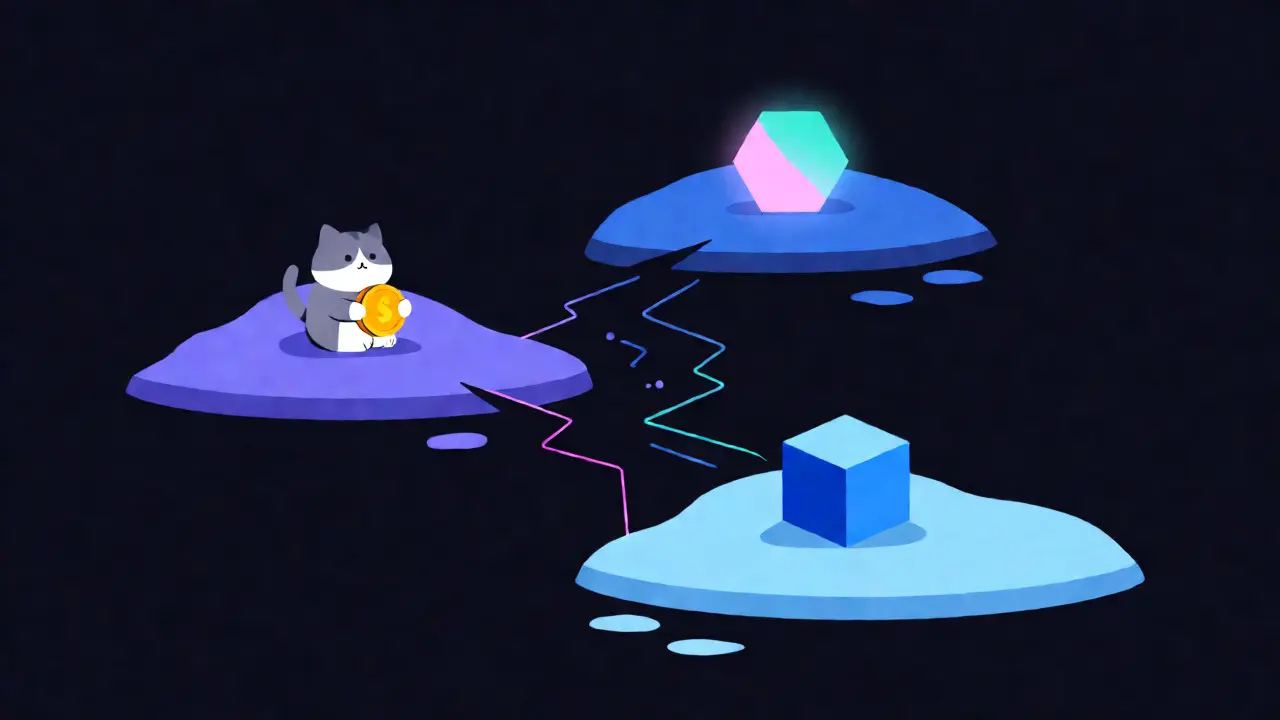
If you search for Lolcat on different aggregators, you will find conflicting information about its underlying technology. Some sources list it on Solana, highlighting its integration with wallets like Phantom and its use of the SPL token standard. Others point to Ethereum, referencing an ERC-20 contract address starting with 0xc28. Still others mention Base, an Ethereum layer-2 solution known for low fees.
Why does this matter? Because liquidity is fragmented. If you buy the Solana version, you cannot easily trade it against the Ethereum version without bridging assets, which incurs fees and risks. Data providers like CoinGecko and CoinMarketCap sometimes aggregate these distinct tokens under similar tickers, leading to confusing price discrepancies. For instance, one snapshot might show a market cap of $40 on Solana, while another shows $350,000 on Base. Always verify the contract address before purchasing. Do not assume all "LOLCAT" tokens are the same asset.
Tokenomics and Supply Mechanics
The core tokenomics are straightforward, at least on paper. Most variants of Lolcat adhere to a fixed maximum supply of 1 billion tokens. This cap is intended to prevent infinite inflation, a common criticism of some earlier meme coins. Circulating supply figures hover near this maximum, typically reported between 995 million and 1 billion tokens. This means nearly all tokens are already in circulation, leaving little room for new supply shocks from team unlocks or emissions.
Some reports mention a 20% burn mechanism shortly after launch. Burning tokens reduces the total supply, theoretically increasing scarcity. If 200 million tokens were removed from circulation, the remaining 800 million would need less capital inflow to move the price. However, given the small market cap, even minor burns can have outsized psychological effects rather than fundamental economic ones. The lack of complex smart contract features beyond basic transfer and burn functions keeps the token simple but also limits its utility outside of speculation.
Market Performance and Volatility
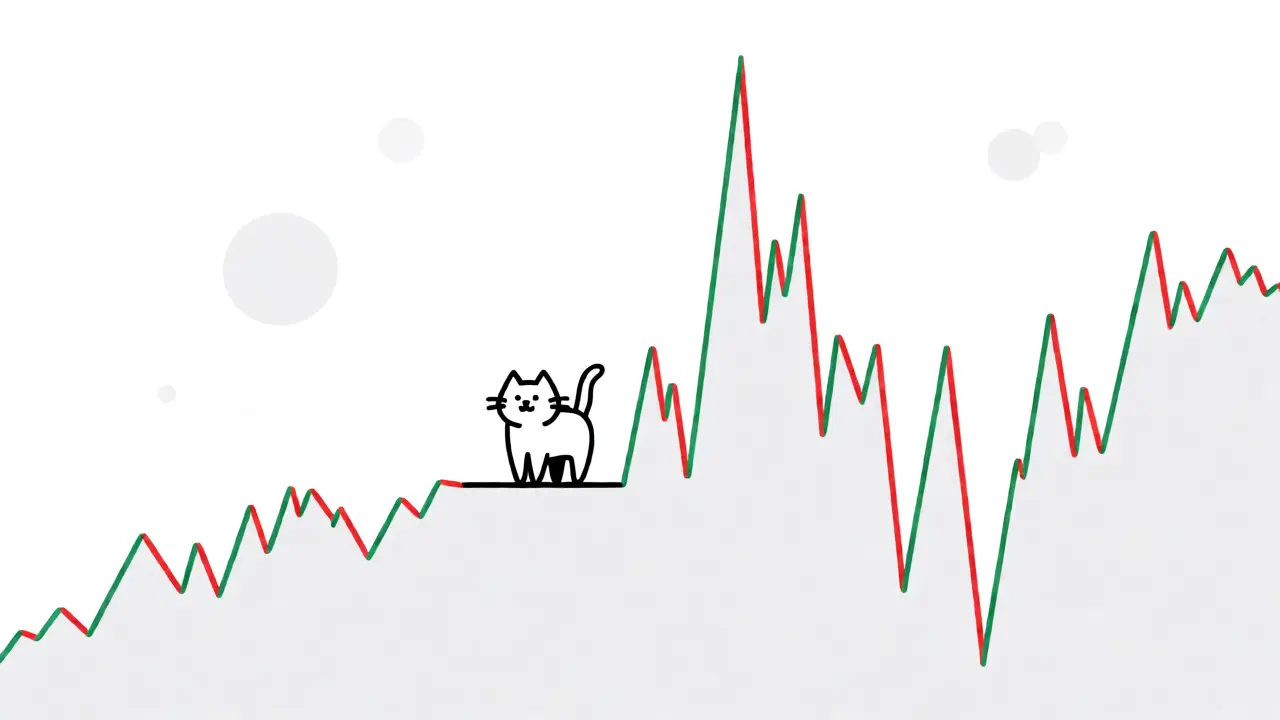
Lolcat is a textbook example of extreme volatility. Prices have ranged from sub-cent levels ($0.00001) to nearly eight cents ($0.0769) depending on the timeframe and exchange. Daily changes of -14% or +88% are not uncommon. This erratic behavior stems from low liquidity. With daily trading volumes sometimes dropping below $100 on certain chains, a single large sell order can crash the price, while a modest buy wave can pump it significantly.
Rankings reflect this instability. Lolcat typically sits between #3,600 and #5,900 on major aggregators like CoinGecko. It holds a spot among the top 100 cat-themed coins, but barely. Its market dominance is effectively zero percent, meaning it has negligible impact on the broader crypto market. Investors should treat this asset as highly speculative. The potential for 10x returns exists, but so does the risk of losing 90% of your investment overnight due to thin order books.
Community and Social Sentiment
A meme coin lives or dies by its community. Unfortunately, Lolcat's social metrics suggest a very small footprint. Reports indicate Twitter followers in the hundreds and Telegram users around 150. Compare this to Dogecoin or Shiba Inu, which boast millions of followers, and the difference becomes stark. There is no massive viral engine driving organic growth right now.
The community seems to consist of niche enthusiasts who appreciate the specific Bitcointalk reference. Engagement is driven more by shared nostalgia than by broad appeal. Without active marketing campaigns or influencer endorsements, sustaining interest is difficult. If you are considering joining, check the current activity levels in their Telegram channels. A quiet chat room is a red flag for a dead project, whereas consistent conversation indicates a surviving, albeit small, tribe.
How to Buy and Store Lolcat
Purchasing Lolcat depends entirely on which chain variant you target. Here is a quick breakdown:
- Solana Variant: Use a wallet like Phantom. Connect to a DEX like Raydium or Jupiter. Swap SOL for LOLCAT. Be aware of slippage settings due to low liquidity.
- Ethereum/Base Variant: Use MetaMask or Rabby. Fund your wallet with ETH. Swap via Uniswap (for Ethereum) or Aerodrome (for Base). Gas fees will apply, making small trades less efficient on mainnet.
- Centralized Exchanges: Some smaller CEXs may list specific variants. Verify the listing chain carefully. Binance educational pages mention it, but actual spot trading availability fluctuates.
Storage is standard. Your private keys control the assets. Since this is a micro-cap token, consider moving holdings to cold storage if you plan to hold long-term, though many traders keep them in hot wallets for quick access during volatility spikes.
Risks and Considerations
Before diving in, recognize the inherent risks. First, rug pulls are a constant threat in the meme coin space. With multiple chain variants, malicious actors could deploy fake contracts using the same name. Always cross-reference the contract address with reputable aggregators. Second, regulatory uncertainty looms over all meme coins. They are generally classified as securities or commodities depending on jurisdiction, and tax implications for frequent trading can be complex.
Third, there is no roadmap. Unlike projects building DeFi protocols or NFT platforms, Lolcat has no announced technical upgrades or partnerships. Its future value depends entirely on renewed social media attention. If the meme fades, the token likely follows. Treat any capital allocated to Lolcat as money you are willing to lose completely.
Is Lolcat the same as other cat coins like Dogecoin?
No. While they share the canine/feline theme, Lolcat is much smaller, newer, and specifically references a 2010 Bitcointalk meme. Dogecoin is a legacy coin with a massive ecosystem and merchant adoption, whereas Lolcat is a niche micro-cap asset with minimal utility.
Why do prices differ so much across websites?
This happens because multiple versions of Lolcat exist on different blockchains (Solana, Ethereum, Base). Aggregators may mix data from these separate contracts, or report stale prices from illiquid markets. Always check the specific contract address and chain network.
Can I stake Lolcat for rewards?
Generally, no. Lolcat is a simple fungible token without native staking mechanisms. Any staking offers found on third-party sites are likely experimental or unofficial and carry additional smart contract risks.
What is the maximum supply of Lolcat?
The maximum supply is fixed at 1,000,000,000 (1 billion) tokens across most documented variants. Nearly all of these tokens are currently in circulation.
Is Lolcat a good investment?
It is a high-risk speculative play. It lacks fundamental utility and relies on nostalgia and community hype. Only invest what you can afford to lose, and be prepared for significant volatility and low liquidity.