What is River (RIVER) Crypto? Chain-Abstraction Stablecoin Guide
 Oct, 5 2026
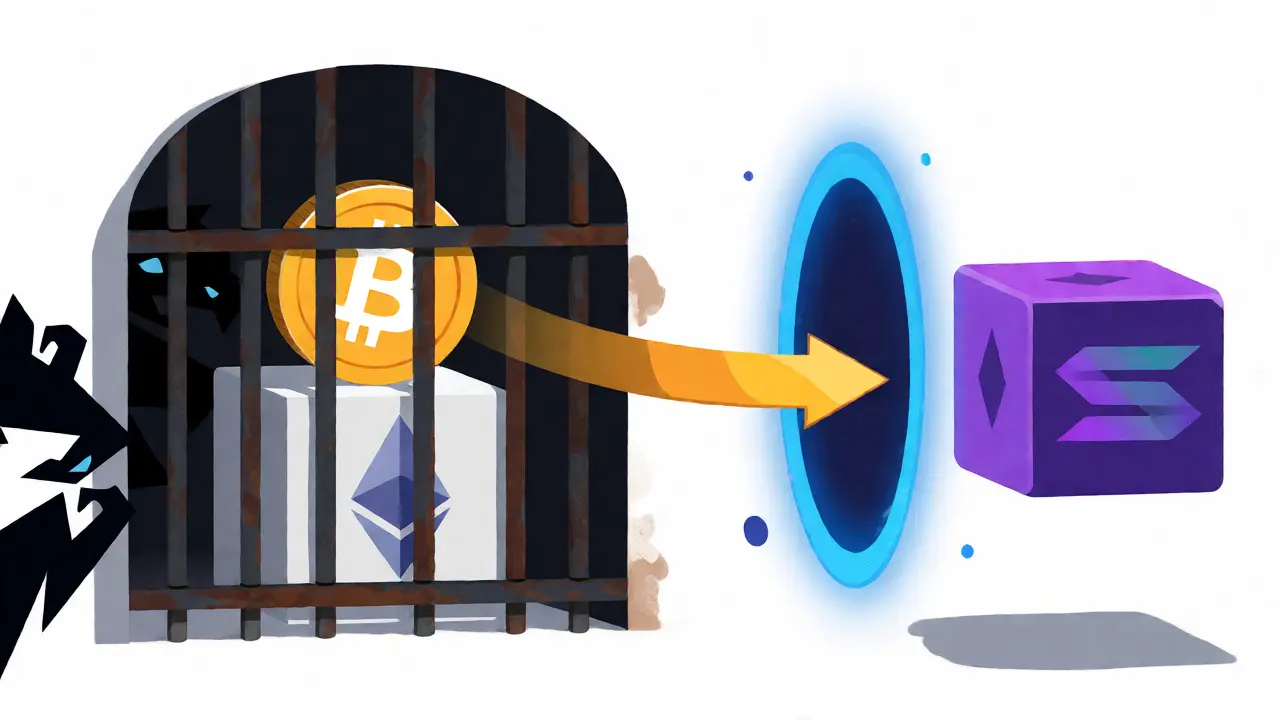
Imagine you have Bitcoin on the Ethereum network and want to use it as collateral for a stablecoin on Solana. Traditionally, this meant using a bridge-a digital toll booth where your assets get locked up, often becoming targets for hackers who steal billions every year. River (RIVER) is a cryptocurrency designed to kill that toll booth. It serves as the governance and utility token for the River chain-abstraction stablecoin system, a protocol that lets you move value across blockchains without ever locking your assets in a traditional bridge.
If you’ve been watching the DeFi space in 2025 and 2026, you know fragmentation is the enemy. Liquidity is scattered like confetti across dozens of chains. River aims to glue that mess together with its flagship stablecoin, satUSD, and the RIVER token that keeps the engine running. But what does that actually mean for your wallet? Let’s break down how RIVER works, why it matters, and what you need to know before buying.
The Core Problem: Why Bridges Fail
Cross-chain interoperability has always been DeFi’s biggest headache. When you want to move assets from Chain A to Chain B, most protocols use a "lock-and-mint" mechanism. You lock your ETH in a smart contract on Ethereum, and the protocol mints a wrapped version on another chain. Simple in theory, dangerous in practice. If that smart contract gets hacked, your original ETH is gone, and the wrapped version becomes worthless paper.
River solves this by ditching the lock-and-mint model entirely. Instead, it uses an omni-CDP (collateralized debt position) architecture. Think of it as having a global credit card backed by your assets, no matter which blockchain they sit on. You deposit collateral on one chain, and the protocol recognizes it instantly on another, allowing you to mint satUSD natively there. No bridges, no custodians, no single point of failure waiting to be exploited.
Meet satUSD: The Heart of the Ecosystem
You can’t understand RIVER without understanding satUSD. This isn’t just another algorithmic stablecoin trying to peg itself to the dollar through complex math. satUSD is backed by real collateral-BTC, ETH, and other major assets-held across multiple chains simultaneously. Because the underlying infrastructure abstracts away the complexity of which chain your money is on, satUSD behaves like a native asset everywhere.
This design choice makes satUSD fundamentally different from older stablecoins. Most stablecoins are siloed; USDC on Ethereum doesn’t automatically work on Arbitrum without bridging. satUSD flows freely because the protocol treats all supported chains as one unified liquidity pool. For users, this means higher capital efficiency. Your collateral isn’t stuck in transit; it’s working for you on multiple fronts at once.
What Does the RIVER Token Actually Do?
So, if satUSD is the product, what is RIVER? It’s the key to the kingdom. As a governance and incentive token, RIVER gives holders two primary powers:
- Governance Voting: Holders vote on critical protocol parameters. Should we accept new collateral types? What should the borrowing fees be? How do we handle liquidations? These aren’t decisions made by a small team in a back room; they’re community-driven choices executed via smart contracts.
- Staking Incentives: You can stake RIVER to earn rewards. This aligns long-term holders with the protocol’s success. By staking, you help secure the network and participate in the economic incentives that keep the system healthy.
Unlike some tokens that promise vague "utility," RIVER’s role is concrete. It controls the levers of the protocol. If the community decides the fee structure is too high, RIVER holders cast the votes to lower it. This democratic approach mirrors successful models like MakerDAO but applies them to a multi-chain reality.

Technical Deep Dive: Omni-CDP and Vaults
Under the hood, River uses two main modules: PrimeVault and SmartVault. These are designed to simplify yield generation while minimizing risk.
| Feature | PrimeVault | SmartVault |
|---|---|---|
| Primary Goal | Collateral Flexibility | Automated Yield |
| Liquidation Risk | Standard CDP rules apply | No-Liquidation Strategy |
| User Control | High (Manual management) | Medium (Automated strategies) |
| Best For | Active Traders | Passive Investors |
PrimeVault offers flexibility, letting you choose exactly how much collateral to post and when to rebalance. SmartVault takes a more hands-off approach, using automated strategies to generate yield without exposing you to sudden liquidation events. This dual-track system caters to both power users who want control and casual users who just want their money to work quietly in the background.
Tokenomics: Supply and Distribution
Numbers matter in crypto. According to official documentation updated in mid-2026, RIVER has a maximum supply cap of 100,000,000 tokens. However, don’t let the total number confuse you. The circulating supply varies depending on where you look, ranging from approximately 19.6 million to over 37 million tokens as of late 2026. This discrepancy often stems from different definitions of "circulating"-some data providers count only fully unlocked tokens, while others include vested amounts.
The distribution strategy balances immediate liquidity needs with long-term alignment. Tokens are split among community participants, investors, the team, and ecosystem partners. Vesting schedules ensure that early backers don’t dump their holdings immediately, which helps stabilize the price during the project’s growth phase. With a market capitalization hovering around $23-25 million, RIVER sits firmly in the mid-cap DeFi category-large enough to have liquidity, small enough to still offer significant upside potential.

How to Buy and Store RIVER
Getting your hands on RIVER is relatively straightforward, though it requires navigating a few specific venues. Since RIVER is primarily an ERC-20 token on Ethereum, any wallet that supports Ethereum-based assets will work. MetaMask, Rabby, and Phantom are popular choices.
You can buy RIVER on several centralized exchanges, with Bitget being one of the most active venues. Decentralized options exist too, including PancakeSwap Infinity CLMM on the Binance Smart Chain. Note that while some sources mention BNB Chain deployment, the canonical contract lives on Ethereum at address 0xdA7AD9dea9397cffdDAE2F8a052B82f1484252B3. Always verify the contract address before sending funds to avoid scams.
Be aware that RIVER is not yet listed on tier-one exchanges like Binance’s spot market. This limits mainstream accessibility but also means less competition from retail hype cycles. Trading volumes typically range between $2.6 million and $4 million daily, indicating healthy interest without extreme volatility spikes seen in micro-caps.
Risks and Considerations
No investment is without risk, and River is no exception. First, the "chain-abstraction" narrative is competitive. Other projects like LayerZero and Wormhole are also solving cross-chain issues. River’s differentiation lies in its focus on stablecoins and CDPs, but execution risk remains high in the fast-moving DeFi landscape.
Second, security audits. While the protocol claims to eliminate bridge risks, the code governing the omni-CDP system must be flawless. Publicly available audit reports are scarce in current listings, so due diligence is essential. Check the official docs at docs.river.inc for the latest technical disclosures.
Finally, beware of name confusion. There is a separate project called "River Token" (ticker: RIVR) associated with bottled water and loyalty rewards on the MultiversX blockchain. Don’t mix them up. We’re talking about RIVER, the DeFi governance token on Ethereum.
Frequently Asked Questions
Is RIVER a stablecoin?
No, RIVER is not a stablecoin. It is a volatile governance and utility token whose price fluctuates based on market demand. The stablecoin within the River ecosystem is called satUSD, which is pegged to the US dollar and backed by collateral.
What blockchain is RIVER built on?
RIVER is primarily an ERC-20 token on the Ethereum network. While it may be accessible or mirrored on other chains like Binance Smart Chain for trading purposes, its canonical home and governance functions reside on Ethereum.
How many RIVER tokens are in circulation?
As of late 2026, estimates vary between 19.6 million and 37.2 million circulating tokens out of a maximum supply of 100 million. This variance depends on whether vesting schedules and locked allocations are counted as circulating by different data aggregators.
Can I stake RIVER?
Yes, holding and staking RIVER allows you to participate in governance voting and earn protocol incentives. Staking aligns your interests with the long-term health of the River ecosystem.
Where can I buy RIVER?
You can trade RIVER on centralized exchanges like Bitget and Hotcoin, as well as decentralized exchanges such as PancakeSwap Infinity CLMM. It is currently not listed for direct trading on Binance spot markets.