What is SatoshiSync (SSNC)? A Guide to Bitcoin Cross-Chain Liquidity
 Apr, 16 2026
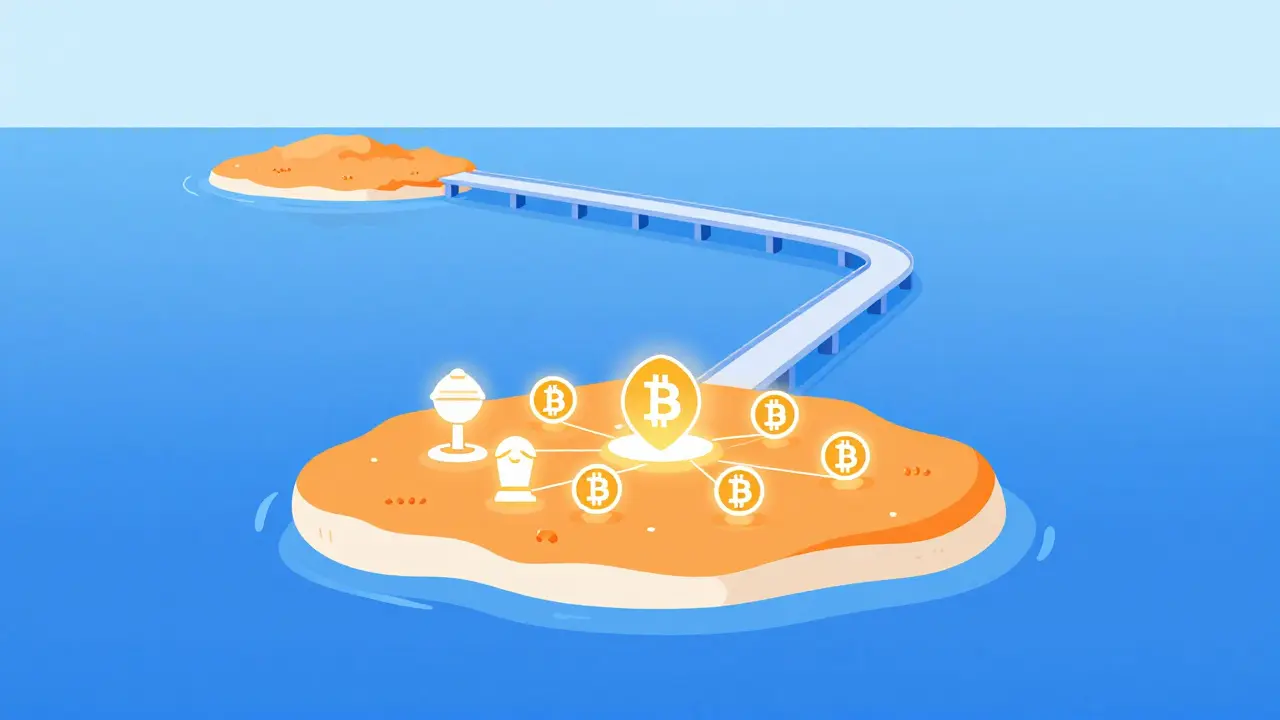
Imagine trying to move your favorite digital collectibles or tokens from the Bitcoin network to a place where you can actually use them for lending or trading, only to find a massive wall in your way. For a long time, Bitcoin assets like inscriptions were essentially stuck on their own island. SatoshiSync is a chain-agnostic protocol designed to break those walls by providing liquidity to the Bitcoin ecosystem. Commonly referred to as a pioneer for cross-chain inscriptions, it allows users to move assets between Bitcoin and other networks without needing to be a coding expert.
Quick Takeaways: The SSNC Ecosystem
- Purpose: Acts as a bridge for Bitcoin-based assets (BRC-20, ARC-20, SRC-20) to move to EVM chains and Solana.
- The Token: SSNC is the native utility and governance token.
- Key Tech: Uses RC20 routers and LayerZero integration to handle transfers.
- Value Driver: A deflationary model where bridging fees are used to buy back and burn tokens.
How SatoshiSync Actually Works
Most people know Bitcoin as a store of value, but the rise of BRC-20 is a token standard that allows for the creation of fungible tokens directly on the Bitcoin blockchain using inscriptions has created a liquidity problem. These tokens are great, but they don't naturally "talk" to other networks like Ethereum. This is where SatoshiSync steps in as a market maker for cross-chain inscriptions.
The protocol uses something called the Cross Chain Inscriptions Protocol (CCIP) and RC20 routers. In simple terms, it acts as a translator and courier. If you have a BRC-20 token and want to use it on an EVM-compatible chain is any blockchain that uses the Ethereum Virtual Machine, allowing for smart contracts and decentralized apps , SatoshiSync handles the bridge in a few clicks. By mid-2024, the project launched Version 2, which integrated LayerZero is an omnichain interoperability protocol that enables different blockchains to communicate seamlessly without intermediaries . This move significantly boosted its ability to move data and value across different chains without the usual friction.
Breaking Down the SSNC Token and Economics
The SSNC token is not just a ticker on a screen; it's the engine that runs the protocol's economy. With a maximum supply of 1 billion tokens, the project uses a specific set of rules to keep the token valuable over time. One of the most interesting parts is the revenue share. When a user bridges an asset, the protocol takes a small fee-usually between 0.1% and 0.2%.
Instead of just keeping that money, the protocol uses it to buy back SSNC tokens from the market. A portion of these bought-back tokens is given to stakers, and another portion is permanently destroyed, or "burned." This creates a deflationary pressure: as more people use the bridge, more tokens are removed from circulation, theoretically increasing the value for those who hold.
| Attribute | Value |
|---|---|
| Max Total Supply | 1,000,000,000 SSNC |
| Circulating Supply | ~53.5 Million SSNC |
| Team Allocation | 15% (with 24-month vesting) |
| Burn Mechanism | Percentage of bridging fees |
Why This Matters for BTCFi
You've probably heard the term BTCFi is the emerging sector of Decentralized Finance built specifically on top of the Bitcoin network . For years, Bitcoin was just for holding. Now, with things like Runes is a token standard for Bitcoin that allows users to create and mint tokens more efficiently than previous methods and L2 solutions, people want to do more. They want to earn yield, provide liquidity, and trade.
The biggest hurdle is that Bitcoin's native environment isn't built for complex smart contracts. By bridging these assets to an EVM chain or Solana, SatoshiSync allows a user to take a Bitcoin-based asset and put it into a DeFi pool on another network. This unlocks a massive amount of dormant capital. Instead of your BRC-20 tokens just sitting in a wallet, they can actually work for you.
Using the Protocol: Step-by-Step
The goal of SatoshiSync is to make this process as simple as possible. You don't need to be a developer to bridge assets. Here is the basic flow:
- Connect Wallets: You head to the bridge page and connect your Bitcoin-compatible wallet (where your inscriptions live) and your destination wallet (like a MetaMask address for EVM chains).
- Select Assets: Choose the BRC-20, ARC-20, or SRC-20 tokens you want to move.
- Confirm Recipient: Ensure the recipient address matches your connected EVM wallet to avoid losing funds.
- Execute Bridge: The RC20 router handles the transfer, and your assets appear on the target chain.
For those who want to be more active, you can stake your SSNC tokens. This doesn't just give you a chance to earn RC20 rewards; it also grants you governance rights. This means you get a say in how the DAO (Decentralized Autonomous Organization) manages the protocol's future.

Potential Risks and Market Reality
It is important to look at the numbers. While the tech is promising, SatoshiSync has seen significant price volatility. It reached an all-time high near $0.19, but has since traded at much lower fractions of a cent. This is common for early-stage infrastructure projects, but it means the risk is high.
Bridging always carries a certain level of risk, specifically smart contract vulnerabilities. When you move an asset from one chain to another, you are relying on the bridge's code to lock the asset on one side and mint it on the other. While the integration of LayerZero adds a layer of industry-standard security, no bridge is entirely without risk. Additionally, the success of SSNC is tied directly to the growth of the Bitcoin inscription market. If BRC-20 tokens lose popularity, the demand for the bridge drops.
What exactly does the SSNC token do?
The SSNC token is used for governance, staking, and as a value-capture mechanism for the protocol. Holders can stake tokens to earn RC20 rewards and participate in DAO voting. Furthermore, a portion of the fees generated from the cross-chain bridge is used to buy back and burn SSNC tokens, which is intended to reduce supply and support the token's value.
Which token standards are supported by SatoshiSync?
SatoshiSync supports several Bitcoin token standards, specifically BRC-20, ARC-20, and SRC-20. This allows users to move a wide variety of Bitcoin-native assets across to other blockchains like Solana or EVM-compatible networks.
How does the burning mechanism work?
Whenever someone uses the bridge to move assets, SatoshiSync charges a small transaction fee (0.1% to 0.2%). The protocol takes a part of this revenue to purchase SSNC tokens from the open market. Some of these tokens are distributed to stakers, while others are "burned" (permanently removed from circulation), making the token deflationary.
Is SatoshiSync a centralized or decentralized project?
SatoshiSync was launched as a fully decentralized autonomous organization (DAO). This means that instead of a single company making all the decisions, the governance and future direction of the protocol are determined by the community of SSNC token holders.
Do I need to know how to code to use the bridge?
No, you do not need any technical or coding knowledge. The platform is designed as a user-friendly dashboard where you simply connect your wallets and select the assets you wish to bridge. It functions essentially as a cross-chain market maker for the average user.
Next Steps for Users
If you are new to the ecosystem, the best starting point is to explore the dashboard to see how your current Bitcoin assets might be utilized. For those looking to invest, checking a reliable exchange like Gate.com to understand current liquidity and pricing is a smart move. If you already hold SSNC, consider looking into the staking options for 3 to 6 months to see if the yield in BTCFi tokens aligns with your financial goals.