What is SHRIMP Crypto? Tokenomics, Variants, and Risks Explained (2026)
 May, 12 2026
If you’ve seen the ticker SHRIMP flash across a screen or heard it whispered in crypto forums, you might be wondering what’s going on. It sounds like just another meme coin riding the wave of internet humor, but the reality is messier. There isn’t just one SHRIMP coin. Instead, there are several distinct tokens sharing the same name or theme, living on different blockchains with wildly different rules, prices, and risks.
As of May 2026, navigating the SHRIMP landscape requires more than just checking a price chart. You need to know which blockchain you’re looking at, how the supply works, and whether anyone is actually trading it. Let’s break down what these tokens are, how they differ, and why you should proceed with extreme caution.
The Main Player: SHRIMP on the Aptos Blockchain
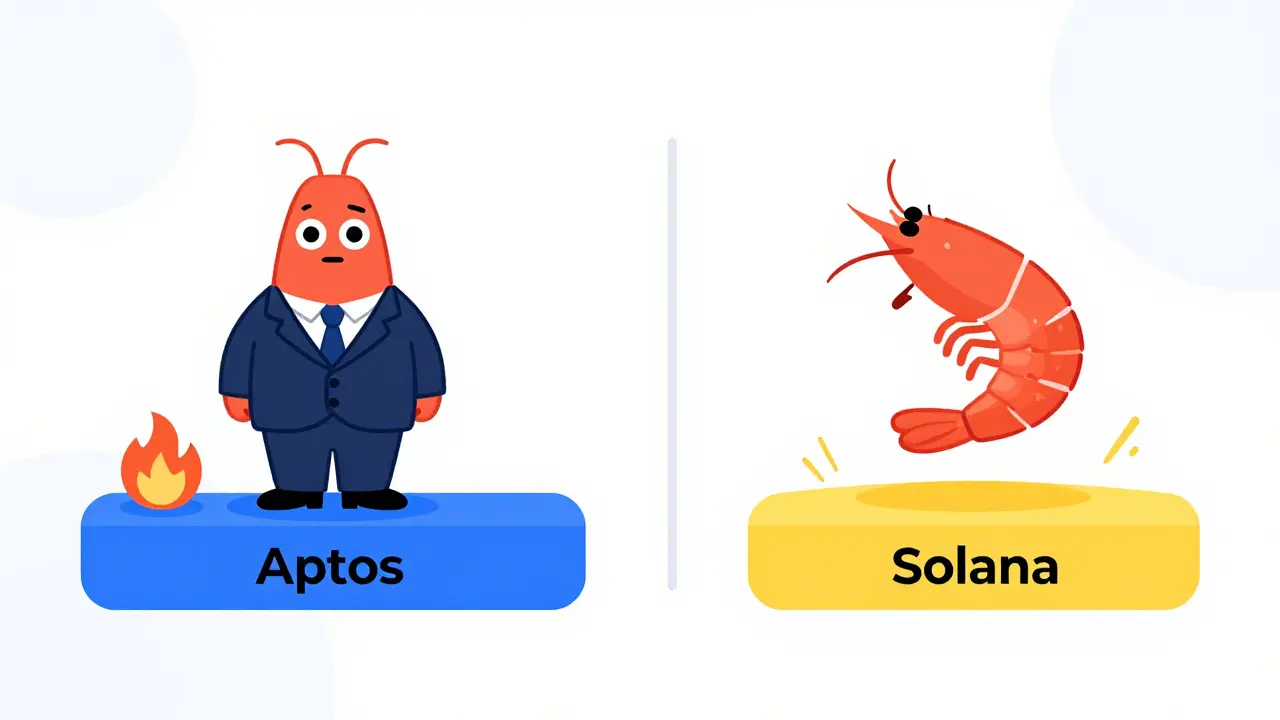
When most serious analysts talk about SHRIMP today, they are referring to the version built on the Aptos blockchain. This token was created by the team behind a project called Aptomingos. Unlike many random meme coins that pop up overnight, this version has a defined structure and specific mechanics designed to keep users engaged.
The core idea here is community participation through economic incentives. The total supply is fixed at 121.21 million tokens. Since the maximum supply matches the total supply exactly, there is no inflation-no new tokens will ever be printed to dilute your holdings. That’s a rare feature in the meme coin world.
But the real twist lies in its unique burn mechanism called The Barbecue. Here’s how it works: if users choose not to engage with the protocol, a percentage of tokens gets burned. This creates a deflationary pressure where holding without participating can actually hurt your value relative to the active community. To sweeten the pot, there’s a feature called The Reserve. Once 1% of the entire supply is burned in The Barbecue, $2,000 USD worth of tokens is deployed to fund community-voted subgoals. It’s an attempt to turn passive holders into active participants.
The Other SHRIMPs: Solana and Beyond
While the Aptos version tries to build a structured ecosystem, other SHRIMP tokens exist in a much wilder west. One notable variant lives on the Solana blockchain, known for its speed and low transaction costs. However, as of mid-2026, this Solana-based SHRIMP is facing significant liquidity issues. Platforms like CoinSwitch have restricted buying due to low liquidity, meaning you can sell if you already own it, but you likely can’t buy new positions. This is a major red flag indicating reduced market activity and capital flow.
Then there’s THE SHRIMP ARMY, which trades under the ticker SHRIMPS on exchanges like LBank. Don’t let the similar name fool you; this is a completely different asset. It has a circulating supply of 946 million tokens out of a max of 1 billion. Its market cap sits around $15,978, ranking it over #10,000 in the global crypto market. The price hovers near fractions of a cent, showing extreme volatility typical of micro-cap assets.
Another variant listed on platforms like Bybit and Crypto.com shows even thinner trading conditions. On Bybit, the 24-hour trading volume for Shrimp Coin dropped to just $5.51 USD in late March 2026. Imagine trying to buy or sell a stock where less than ten dollars change hands all day. That’s the reality for some SHRIMP variants. Such low volumes mean high slippage-if you try to sell a large amount, you could crash the price yourself.
| Token Name | Blockchain | Max Supply | Key Feature / Status | Risk Level |
|---|---|---|---|---|
| SHRIMP (Primary) | Aptos | 121.21M | Fixed supply, 'The Barbecue' burn mechanic | High |
| SHRIMP (Solana) | Solana | Varies | Buying restricted due to low liquidity | Very High |
| THE SHRIMP ARMY (SHRIMPS) | Mixed | 1,000M | Micro-cap, extremely low market cap (~$16k) | Extreme |
| Shrimp Coin (Bybit) | Mixed | 1.00B | Negligible volume ($5/day), near all-time lows | Extreme |
Price History and Volatility: A Cautionary Tale
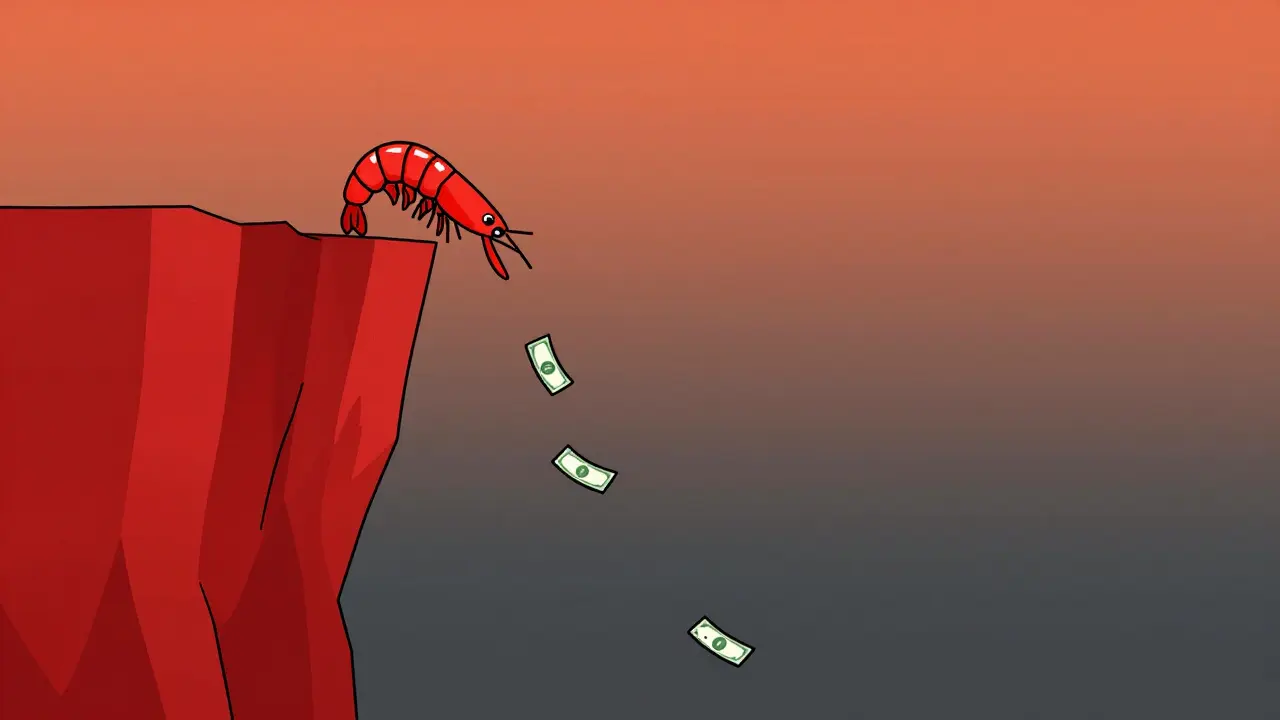
Let’s look at the numbers, because they tell a stark story. If you bought any SHRIMP variant at its peak, you are currently sitting on massive losses. For example, the Bybit-listed Shrimp Coin hit an all-time high of roughly $0.000637 in January 2026. Just two months later, by March 2026, it had plummeted to $0.000008. That’s a decline of nearly 99%.
THE SHRIMP ARMY (SHRIMPS) followed a similar path, dropping from an all-time high of $0.000907 to current levels around $0.000016. Even the CoinGecko-tracked SHRIMP variant fell from its December 2024 high of $0.00036 to around $0.000029 by May 2026. These aren’t minor dips; they are catastrophic drawdowns common in speculative meme coins that fail to sustain interest.
Predictive models offer little comfort. LBank’s analysis suggests THE SHRIMP ARMY might reach $0.000017 by 2027-a marginal increase from current levels. This indicates that even optimistic models see almost no upside potential. The market simply doesn’t believe in these assets right now.
Liquidity and Trading Realities
In crypto, liquidity is king. Without it, you can’t exit your position when you want to. The SHRIMP ecosystem suffers from severe fragmentation. The Solana variant explicitly blocks new purchases on major platforms like CoinSwitch. The Bybit variant sees single-digit dollar volumes daily. Only one exchange is often cited for price aggregation on CoinGecko, meaning there’s barely anywhere to trade these tokens.
This lack of depth means that price discovery is broken. A small sell order can wipe out 10% of the value instantly. For retail investors, this makes SHRIMP tokens highly illiquid and dangerous to hold unless you are prepared to lose the entire investment. There is no institutional adoption, no mainstream recognition, and limited exchange support.

Who Is Behind SHRIMP?
Transparency is crucial in crypto, yet SHRIMP scores poorly here. The Aptos-based token credits its creation to the team behind Aptomingos, but specific names, backgrounds, or credentials are largely absent from public records. There are no prominent GitHub repositories showing active development, nor are there detailed team profiles available.
For the other variants, information is even scarcer. Regulatory status is non-existent across the board. No jurisdictional registrations or compliance frameworks have been announced. This absence suggests these tokens operate in regulatory gray zones, offering zero legal protection to investors if something goes wrong.
Should You Invest in SHRIMP?
Given the data as of May 2026, the answer leans heavily toward no for anyone seeking stability or growth. SHRIMP tokens represent the highest risk tier of cryptocurrency investing. They combine extreme volatility, declining prices, minimal liquidity, and opaque team structures.
If you are drawn to the Aptos version because of its innovative burn mechanics, understand that innovation doesn’t guarantee value. The market hasn’t rewarded these mechanics with sustained price action or volume. For the Solana and other variants, the liquidity restrictions and near-zero trading volumes make them practically untradeable for meaningful amounts.
Only consider SHRIMP if you are treating it as entertainment money-funds you are fully prepared to lose entirely. Never invest money you need for rent, bills, or savings. Always verify which specific contract address you are interacting with, as swapping the wrong SHRIMP token could lead to losing your assets in a dead-end pool.
Is SHRIMP coin a good investment in 2026?
Based on current market data, SHRIMP is considered a high-risk speculative asset. Most variants have lost over 90% of their value from all-time highs, suffer from low liquidity, and lack strong community adoption. It is not recommended for conservative investors or those seeking stable returns.
What is the difference between SHRIMP on Aptos and Solana?
They are completely different tokens on different blockchains. The Aptos SHRIMP has a fixed supply of 121.21M and features a unique burn mechanic called 'The Barbecue.' The Solana SHRIMP is facing liquidity issues, with many platforms restricting purchases. They do not share value or utility.
How does 'The Barbecue' burn mechanic work?
The Barbecue is a deflationary mechanism on the Aptos SHRIMP token. It incentivizes participation by burning tokens if users do not engage with the protocol. When 1% of the supply is burned, funds from 'The Reserve' are released to community-voted projects, aiming to drive engagement and reduce supply.
Why is buying SHRIMP restricted on some exchanges?
Exchanges like CoinSwitch restrict buying due to low liquidity. This means there aren't enough buyers or sellers to maintain a healthy market. Restricting buys protects the exchange from being stuck with unsellable inventory, while allowing sells lets existing holders exit.
What is the maximum supply of SHRIMP tokens?
It depends on the variant. The primary Aptos SHRIMP has a fixed max supply of 121.21 million tokens. THE SHRIMP ARMY (SHRIMPS) has a max supply of 1 billion tokens. The Bybit-listed Shrimp Coin also has a max supply of 1 billion tokens. Always check the specific contract details.