What is YieldBricks (YBR)? RWA Crypto Token Guide
 Sep, 10 2026
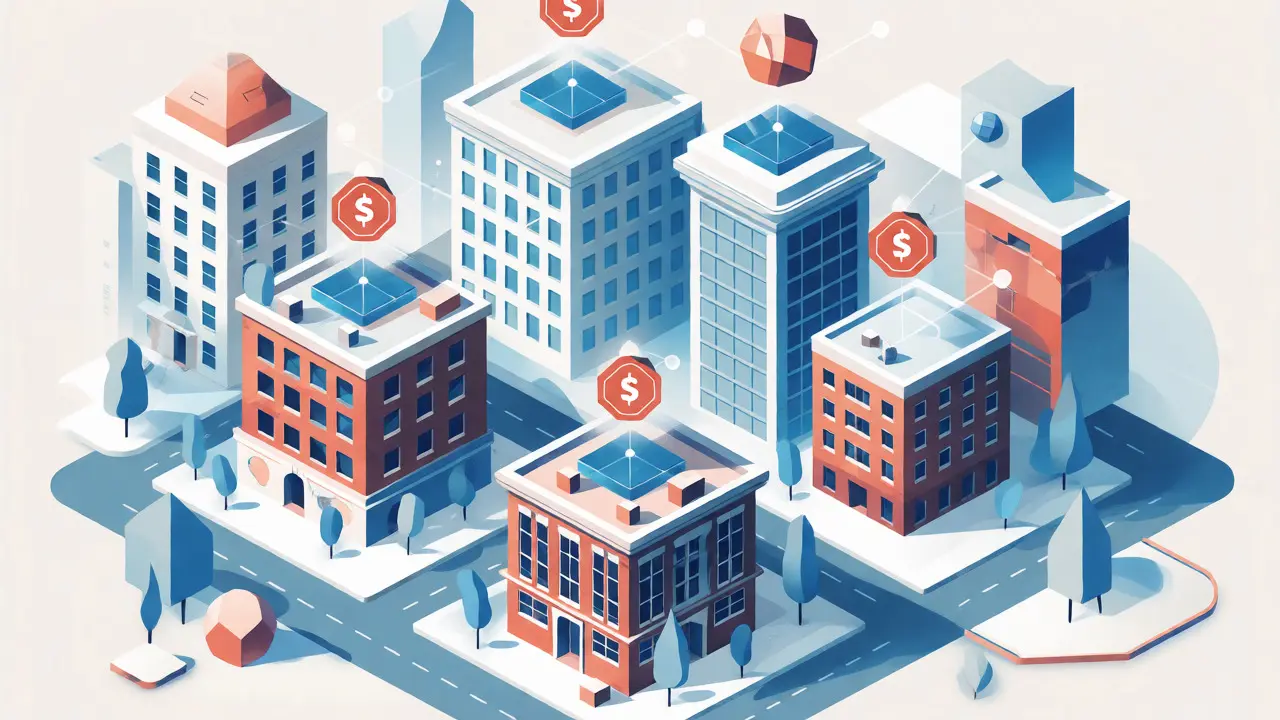
You’ve probably heard the buzz about Real World Assets or RWA being the next big thing in crypto. But most projects require you to be a whale just to get a seat at the table. That’s where YieldBricks (YBR) comes in. It claims to let you invest in high-yield global real estate deals for as little as $50. Sounds too good to be true? Maybe. But before you throw your money into this micro-cap token, you need to understand exactly what it is, how it works, and why the data surrounding it looks a bit messy.
The Core Concept: Bridging Real Estate and DeFi
YieldBricks is an ERC-20 utility cryptocurrency token used within the YieldBricks protocol, a platform that tokenizes real-world asset yields. Think of it as a bridge between traditional investing and decentralized finance (DeFi). The project launched its token sale on October 14, 2024, at an initial price of $0.027 per YBR. Its main pitch is inclusivity. Traditional real estate funds often demand minimum investments in the tens of thousands of dollars. YieldBricks aims to shatter that barrier by allowing retail investors to access vetted, income-generating real estate opportunities through a simplified interface.
The protocol operates on the Arbitrum network, an Ethereum Layer-2 scaling solution known for low transaction fees. This choice makes sense for a platform targeting small-ticket investments. If every trade cost $20 in gas fees, a $50 investment would be eaten alive by costs. By using Arbitrum, YieldBricks keeps overheads low, making the "high-yield" promise slightly more realistic for smaller wallets.
How the YBR Token Works
So, what does holding YBR actually do for you? It’s not just a speculative coin you hope goes up. It’s a utility token with specific functions within the ecosystem:
- Vault Access: You need YBR to unlock high-yield vaults backed by real-world assets.
- Fee Reduction: Holding or staking YBR lowers your transaction fees on the platform.
- Staking Rewards: The system uses a "liquid staking tier model." Commit more tokens or lock them longer, and you unlock better fee discounts or yield multipliers.
The idea is to create a deflationary loop. As users pay fees and participate in staking, some YBR might be burned, reducing supply. The official tokenomics page claims that "hundreds of millions of tokens have already been permanently removed," leaving only about 20 million YBR for future external unlocks. If true, this scarcity could drive value if demand grows.
The Data Mess: Supply and Price Volatility
Here is where things get tricky. If you look up YBR on different trackers, you’ll see wildly different numbers. This isn’t uncommon for new, small-cap tokens, but it demands caution.
| Platform | Price (USD) | Market Cap (USD) | Circulating Supply | Notes |
|---|---|---|---|---|
| Coinbase | $0.0012 | $37,366 | ~30 Million | Low volume, consistent with post-burn supply |
| CoinCarp | $0.00547 | $5,470,000 | Varies | May track older contract or different metric |
| TradingView | $0.00267 | $69,240 | ~25.8 Million | Shows higher recent volume |
| CoinBrain | $0.000000006 | $8.54 | ~1.4 Billion | Likely a deprecated or cloned contract |
Why such discrepancies? Likely due to multiple token contracts existing on-chain. Some trackers might be picking up a copycat token or an older version of the contract. For instance, CoinBrain shows a market cap of under $10, which is clearly wrong for the primary asset. Always verify the contract address-specifically the one starting with `0x119` on Arbitrum-before buying.
Risks and Red Flags
Is YieldBricks a scam? Not necessarily. But it carries significant risks typical of early-stage DeFi projects:
- Lack of Transparency: There are no named founders or executive team members publicly disclosed on major aggregators. Contact is limited to a generic email. In crypto, anonymous teams can be a double-edged sword; they offer privacy but reduce accountability.
- No Public Audits: Major listings like CoinMarketCap and Coinbase don’t highlight third-party security audits. Without a formal audit report from a firm like CertiK or Hacken, smart contract vulnerabilities remain unknown.
- Extreme Volatility: YBR has seen daily swings of ±10% to ±45%. It’s a thinly traded asset. Selling a large position could crash the price instantly due to low liquidity.
- Data Inconsistency: As shown above, conflicting supply figures suggest either poor communication from the team or technical fragmentation in how data providers index the token.

Who Should Consider YBR?
This isn’t for the risk-averse investor looking for stable returns. YieldBricks targets those who want exposure to the RWA narrative without needing six-figure capital. If you believe that tokenized real estate will go mainstream, YBR offers a speculative bet on that trend via a small-cap proxy. However, treat it as venture capital: assume you might lose 100% of your stake.
Next Steps for Investors
If you’re intrigued, here’s a practical checklist:
- Verify the Contract: Ensure you are interacting with the correct Arbitrum contract address.
- Check Liquidity: Look at current trading volumes on MEXC Global or Uniswap v3. Low volume means high slippage.
- Monitor Burns: Keep an eye on the tokenomics page for updates on token burns, as these directly impact supply.
- Diversify: Don’t put all your RWA bets on one micro-cap horse.
What blockchain is YieldBricks built on?
YieldBricks (YBR) is an ERC-20 token deployed on the Arbitrum One network, which is a Layer-2 scaling solution for Ethereum. This allows for lower transaction fees compared to the main Ethereum chain.
Can I buy YBR with fiat currency?
Direct fiat purchases may vary by exchange. Most commonly, users acquire USDT on centralized exchanges like MEXC Global and then swap for YBR on decentralized exchanges like Uniswap v3 on Arbitrum.
Is YieldBricks audited?
As of mid-2026, there are no widely publicized third-party audit reports from major security firms linked directly on primary aggregator pages. Investors should exercise caution regarding smart contract risks.
What is the minimum investment in YieldBricks?
The platform advertises access to real estate-backed yield opportunities for as low as $50, aiming to make real estate investing accessible to retail investors.
Why do different sites show different prices for YBR?
This is likely due to multiple token contracts existing on-chain, including potential clones or deprecated versions. Always verify the official contract address before relying on price data.