Cross-border crypto transfers from China: The 2025 Ban and Legal Realities
 Jun, 28 2026
For years, the idea of moving Bitcoin out of China was a gray area-a risky but technically possible maneuver for those who knew the right contacts. That era is over. As of June 1, 2025, the landscape has shifted from "strictly regulated" to "completely prohibited." If you are looking for a step-by-step guide on how to legally send crypto from mainland China to an overseas wallet today, there isn't one. The path is closed.
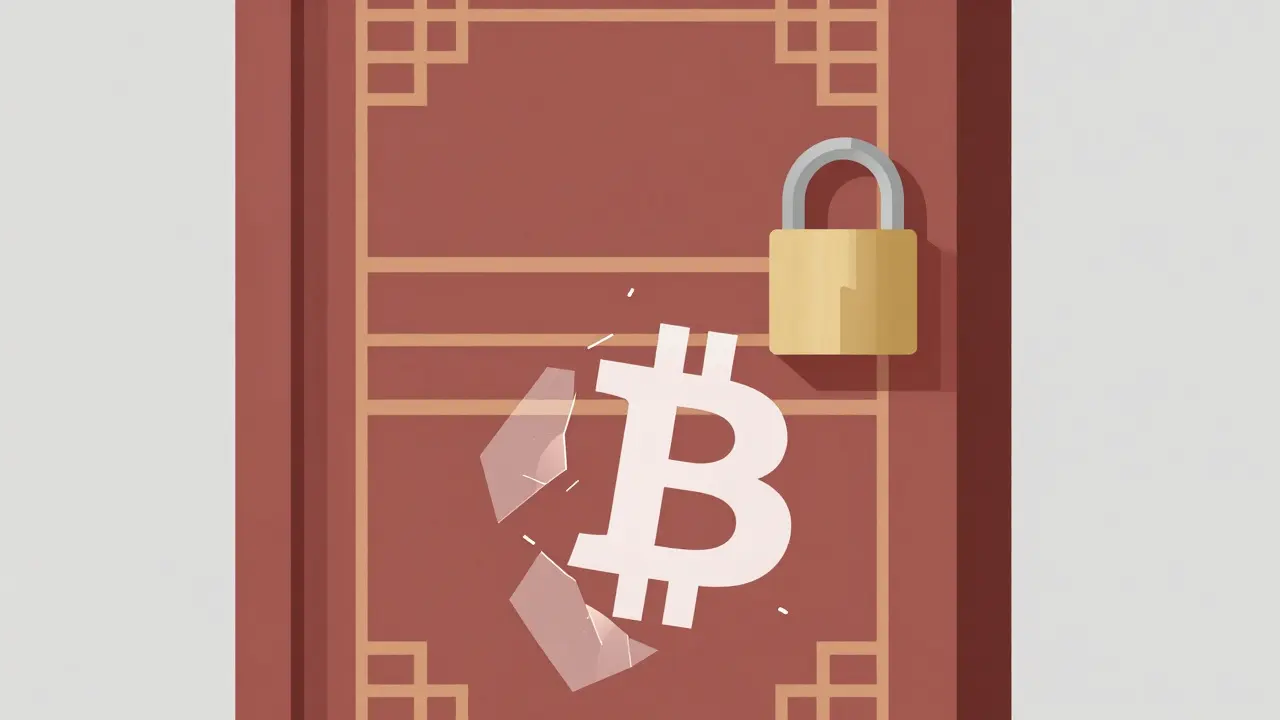
The People's Bank of China (PBOC) didn't just tighten the screws; they locked the door. On May 30, 2025, regulators issued a sweeping ban that extends beyond trading and mining to include individual ownership. This means holding crypto assets, let alone transferring them across borders, is now classified as illegal financial activity. Understanding this reality is crucial because attempting to bypass these rules carries severe legal risks, including asset seizure and criminal liability under anti-money laundering statutes.
The Evolution of China's Crypto Crackdown
To understand why the current situation is so rigid, we have to look at how we got here. China's relationship with cryptocurrency hasn't been linear; it has been a series of escalating crackdowns designed to protect monetary sovereignty.
It started in December 2013 when banks were barred from handling Bitcoin transactions. Then came the September 2017 ban on Initial Coin Offerings (ICOs) and the closure of domestic exchanges. In June 2021, mining operations were shut down nationwide due to energy concerns. But the final nail in the coffin arrived on September 24, 2021, when all crypto trading and payment services were declared illegal.
The May 2025 update was the logical conclusion of this decade-long strategy. By banning ownership itself, the government eliminated the incentive to hold or move these assets. This wasn't a sudden pivot. It was the culmination of a policy aimed at consolidating control over the financial system and preventing capital flight through decentralized channels.
| Date | Action | Impact |
|---|---|---|
| Dec 2013 | Banks barred from crypto transactions | Cut off traditional banking support |
| Sep 2017 | ICO ban & exchange closures | Domestic trading halted |
| Jun 2021 | Mining ban | Hashrate exodus to other countries |
| Sep 2021 | All trading/payment services illegal | Commercial activities banned |
| May 30, 2025 | Total ownership ban | Holding crypto becomes illegal |
Why Ownership Is Now Illegal
The shift from banning *services* to banning *ownership* is significant. Previously, you could own Bitcoin, but you couldn't buy or sell it easily through official channels. Now, possession itself is the violation. The PBOC views virtual currencies as major money laundering channels and threats to financial stability.
This total prohibition covers all activities: trading, mining, derivatives, and yes, cross-border transfers. Financial institutions are forbidden from providing any services related to cryptocurrencies. Internet companies must block and report crypto-related content. Overseas exchanges are explicitly banned from serving Chinese residents. This creates a comprehensive legal barrier that makes legitimate cross-border movement impossible.
If you try to use a bank account to facilitate a crypto transaction, the funds will likely be frozen. The Ministry of Public Security has been tasked with enforcement, using a combination of online tracking and offline inspections. Since all transactions are illegal, traditional Know Your Customer (KYC) processes focus on prevention rather than facilitating trade.
The Role of Digital Yuan (e-CNY)
While private cryptocurrencies are being crushed, the state is pushing its own alternative: the Central Bank Digital Currency (CBDC), known as the digital yuan or e-CNY. This isn't just a digital version of cash; it's a tool for control.
The e-CNY pilot has tested features that would be unthinkable in decentralized systems like Bitcoin. These include expiration dates on funds, sector-specific spending limits, and geographic limitations. For example, the government could theoretically restrict where certain funds can be spent or how long they remain valid. This programmability allows the state to monitor every transaction in real-time.
For individuals looking to move money abroad, the e-CNY offers no solution. It is designed for domestic circulation and controlled offshore use, not for anonymous cross-border transfers. In fact, the rise of the e-CNY reinforces the ban on Bitcoin by providing a state-sanctioned digital alternative that doesn't threaten monetary policy.
Digital Yuan (e-CNY) is China's central bank digital currency designed to replace physical cash and provide state-controlled digital payments. Unlike Bitcoin, it is fully centralized and traceable.
Stablecoins and the Dollar Threat
One reason for the strictness is the perceived threat of dollar-pegged stablecoins. Regulators view tokens like USDT or USDC as representing "at least as grave a monetary threat" as previous cryptocurrency challenges. These stablecoins allow users to bypass capital controls by converting Renminbi (RMB) into a global reserve currency without going through official banking channels.
However, there are whispers of a potential compromise. Wang Yongli, former vice president of the Bank of China, has advocated for launching an offshore renminbi-backed stablecoin. The idea is to recapture China's former leadership in digital assets while countering the influence of dollar stablecoins. E-commerce giants like JD.com and Alibaba have even explored Hong Kong dollar-backed stablecoins.
These discussions suggest that the government might tolerate stablecoins if they are strictly controlled and geofenced. Code-based restrictions could limit circulation to licensed offshore areas like Hong Kong. But until this is officially authorized, any attempt to use dollar stablecoins for cross-border transfers remains illegal.
Risks of Circumvention
You might hear stories about people using peer-to-peer (P2P) platforms, underground banks, or decentralized exchanges to move crypto out of China. While technically possible in some cases, the legal risks are enormous.
Chinese authorities have established coordinated working mechanisms to monitor all cryptocurrency-related activities. They track blockchain transactions, monitor social media for crypto discussions, and inspect financial records. If caught, the consequences include:
- Asset Seizure: All crypto holdings and related fiat funds can be confiscated.
- Criminal Liability: Violations fall under anti-money laundering laws, which carry heavy prison sentences.
- Financial Blacklisting: Individuals may be banned from using banking services entirely.
The regulatory framework specifically targets circumvention attempts. Overseas exchanges are banned from serving Chinese residents, meaning even if you find a platform, accessing it is a violation. Content blocking requirements ensure that most crypto-related information is inaccessible within the country.

Regional Alternatives: Hong Kong and Beyond
Hong Kong operates under a different regulatory framework. It has positioned itself as a crypto hub, allowing licensed exchanges and token issuance. However, mainland Chinese residents still face restrictions accessing these markets due to capital controls.
Even if you travel to Hong Kong, moving large amounts of capital from your mainland accounts requires approval from the State Administration of Foreign Exchange (SAFE). Without this approval, transferring funds to a Hong Kong exchange is difficult. Furthermore, the programmability of potential Chinese stablecoins could enable geofencing that restricts circulation to specific areas, limiting their utility for broader international transfers.
Future Policy Uncertainty
Is there any hope for change? Some experts believe China might adopt more targeted regulations in the future. A July 10, 2025 meeting of the Shanghai State-owned Assets Supervision and Administration Commission discussed strategic responses to digital assets. Experts indicated a potential softening of the strict position, possibly allowing trading on licensed exchanges or implementing stricter KYC controls.
However, these are just discussions. There are no concrete policy signals indicating imminent changes. The current ban remains absolute. Until the government announces a new framework, compliance with the prohibition is the only legally viable option. Investors should not bet on a reversal of policy, as the government's commitment to monetary control appears unwavering.
Can I legally hold Bitcoin in China in 2026?
No. As of May 30, 2025, individual ownership of cryptocurrency is illegal in mainland China. Holding Bitcoin or any other crypto asset violates current regulations and can lead to asset seizure.
Are there any exceptions for cross-border transfers?
There are no legal exceptions for individuals. All cross-border cryptocurrency transfers are prohibited. Financial institutions are banned from facilitating such transactions, and overseas exchanges cannot serve Chinese residents.
What happens if I am caught trying to send crypto abroad?
Consequences include asset forfeiture, fines, and potential criminal charges under anti-money laundering laws. Authorities actively monitor blockchain activity and financial records to detect violations.
Is the Digital Yuan (e-CNY) a replacement for Bitcoin?
The e-CNY is a state-controlled digital currency designed for domestic use and monitored transactions. It is not a decentralized alternative to Bitcoin and does not offer privacy or cross-border anonymity.
Will China ever lift the crypto ban?
While some experts discuss potential regulatory shifts, there are no current plans to lift the ban. The government prioritizes monetary sovereignty and control over capital flows, making a full reversal unlikely in the near future.