No-KYC Crypto Exchange Shutdowns: Why Authorities Are Cracking Down in 2026
 Jun, 27 2026
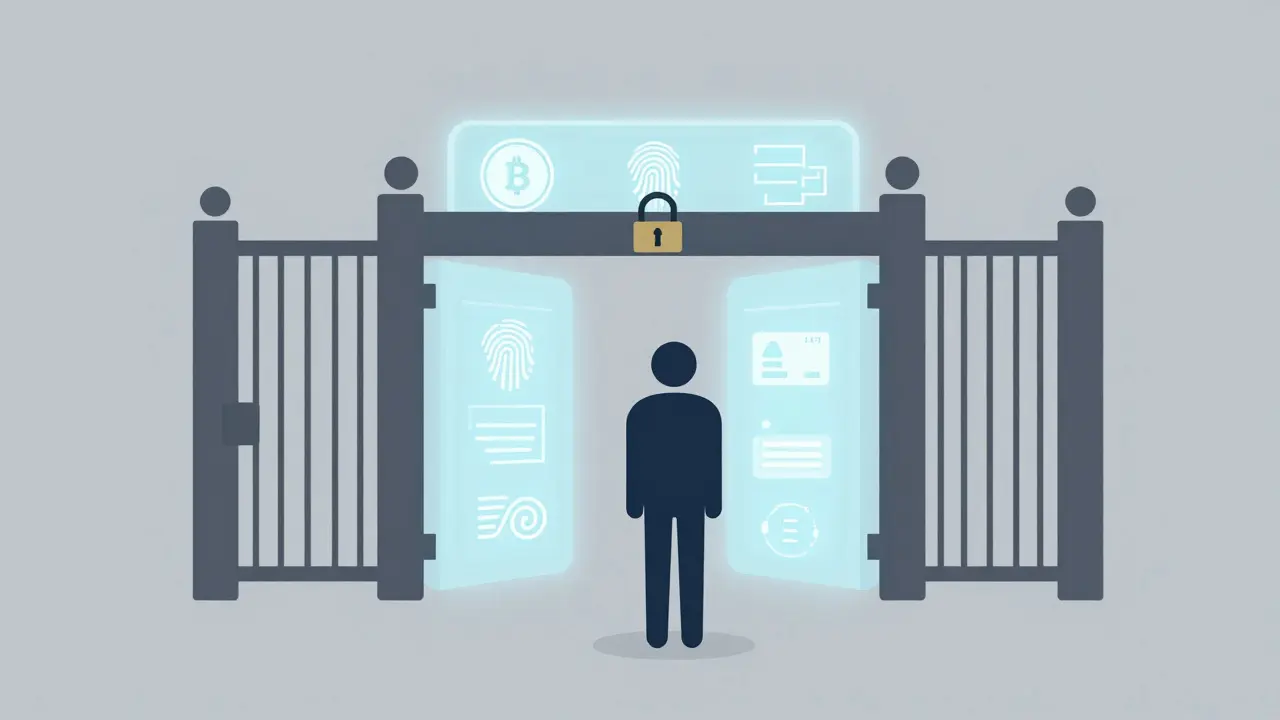
Remember when you could sign up for a crypto exchange with just an email address and start trading within seconds? Those days are effectively over. If you have been holding out on verifying your identity to protect your privacy or avoid taxes, the window for that strategy is closing fast. Across the globe, government authorities are not just warning no-KYC (Know Your Customer) exchanges-they are shutting them down, blocking their apps, and fining them into oblivion.
This isn't a slow-moving trend; it is an active enforcement wave. In 2025 alone, we saw major platforms like KuCoin and BTSE forced to flee regulated jurisdictions like the Seychelles after new laws required strict licensing. India’s Financial Intelligence Unit blocked dozens of offshore apps from serving local users. The message from regulators is clear: if you do not verify who you are, you cannot participate in the formal financial system. For traders, this means higher security but significantly less anonymity. Let’s look at why this crackdown is happening, which exchanges are getting hit, and what it means for your portfolio in 2026.
The End of Anonymity: Why Regulators Are Targeting No-KYC Platforms
To understand why authorities are so aggressive, you have to look at the risks they see. No-KYC exchanges allow users to trade without providing government-issued ID, proof of address, or biometric data. While this appeals to privacy advocates, it creates a blind spot for money laundering, terrorism financing, and sanctions evasion.
Regulatory bodies now view identity verification as essential infrastructure, not an optional feature. When an exchange does not know who its customers are, it cannot report suspicious activity to financial intelligence units. This makes the platform a potential gateway for illicit funds. For example, the U.S. Department of Justice charged KuCoin in March 2024 for operating an unlicensed money transmission business. The DOJ claimed the platform processed over $5 billion in suspicious funds while allowing U.S. users to bypass restrictions. That kind of exposure is exactly what regulators are trying to eliminate.
The shift is also driven by institutional adoption. As banks and traditional finance firms enter the crypto space, they require partners who follow strict Anti-Money Laundering (AML) rules. A no-KYC exchange cannot partner with a major bank because it cannot prove the source of funds. This de-risking behavior cuts off non-compliant exchanges from the broader financial ecosystem, making them isolated and vulnerable.
Major Shutdowns and Relocations in 2025
The most visible sign of this crackdown is the sudden disappearance or relocation of popular exchanges. Here are two standout cases that defined the regulatory landscape leading into 2026:
- KuCoin: After facing intense pressure from the U.S. DOJ and the Commodity Futures Trading Commission (CFTC), KuCoin was effectively shut down in the Seychelles following new licensing laws in September 2025. The exchange subsequently re-domiciled to the Turks and Caicos Islands, a jurisdiction with looser oversight. However, this move did not save it from global scrutiny, and many users found themselves locked out or facing restricted features.
- BTSE: Similarly, BTSE faced shutdown orders in the Seychelles and moved its operations to Costa Rica. This pattern of "regulatory arbitrage"-moving to countries with weaker laws-is becoming harder to sustain as international cooperation improves.
In India, the Financial Intelligence Unit (FIU-IND) took a different approach. Instead of chasing offshore companies globally, they blocked access domestically. In 2025, FIU-IND issued notices to 25 offshore exchanges, including Huione, Paxful, Changelly, and BitMex. These platforms were ordered to remove their apps from Indian stores and block URLs for Indian IP addresses. This shows that even if an exchange is based overseas, it can be forced to stop serving users in specific countries.
| Exchange | Action Taken | Jurisdiction | Outcome |
|---|---|---|---|
| KuCoin | Criminal charges & License revocation | USA / Seychelles | Relocated to Turks and Caicos |
| BTSE | License revocation | Seychelles | Relocated to Costa Rica |
| Huione, Paxful, Changelly | App takedown & URL blocking | India | Blocked for Indian users |
| Coinbase | $100M Settlement | New York, USA | Independent monitor appointed |

The Compliance Shift: Data Behind the Crackdown
The industry has responded rapidly to these threats. According to 2025 data, 92% of centralized crypto exchanges now achieve full KYC compliance, up from 85% in 2024. This is not just about avoiding fines; it is about survival. Exchanges that refuse to comply are losing banking partners, advertisers, and institutional investors.
Consider the impact on user trust. A 2025 CipherTrace report found that robust KYC protocols reduce crypto fraud risk by 38%. Furthermore, 67% of institutional investors cite strong KYC measures as a decisive factor when choosing a platform. Even retail users are shifting their preferences: 58% of U.S. crypto users now prefer platforms that require verification, citing enhanced security as the primary reason.
Technological improvements have also made compliance less painful. The average time to complete KYC verification on major exchanges dropped to 3.5 minutes in 2025, compared to 7 minutes in 2023. With AI-driven document scanning and biometric checks, the friction of signing up is nearly gone. There is simply no excuse for platforms to keep no-KYC options open when the technology exists to make verification instant.
What Happens When an Exchange Gets Shut Down?
If you are using a no-KYC exchange, you need to understand the risks. When authorities shut down a platform, users often face immediate account freezes. Without verified identity information, exchanges may claim they cannot process withdrawals due to legal holds or technical issues. In some cases, funds are lost entirely if the exchange collapses under regulatory pressure.
Moreover, the lack of KYC makes it difficult to recover stolen funds. If your account is hacked, a compliant exchange can trace the transaction through blockchain analytics and work with law enforcement. On a no-KYC platform, there is no record of who owns the wallet, making recovery nearly impossible. You are essentially trusting the exchange’s integrity without any legal recourse.
Banks and payment processors are also cutting ties with non-compliant exchanges. This means you may find yourself unable to deposit fiat currency via credit card or bank transfer. Many no-KYC platforms are forced to rely on peer-to-peer transfers or obscure payment methods, which are slower and more prone to error.
Navigating the New Landscape in 2026
As we move through 2026, the expectation is clear: operating a significant cryptocurrency exchange without comprehensive KYC procedures will become practically impossible in most major markets. Authorities are prioritizing platforms with large user bases and high transaction volumes. If you are trading on a platform that does not ask for your ID, assume it is already on a regulator’s radar.
For traders, the best strategy is to migrate to fully compliant exchanges before they are forced to. Look for platforms that are registered with relevant financial intelligence units, such as the FIU in India or the FinCEN in the United States. Check if the exchange publishes regular audit reports and has partnerships with major banks. These are signs of a stable, long-term operation.
Do not fall for the promise of "privacy coins" or "anonymous trading" as a safe haven. Regulators are increasingly targeting decentralized finance (DeFi) protocols that facilitate anonymous swaps. The goal is to close all loopholes where illicit funds can hide. By choosing a compliant exchange, you protect your assets from seizure, hacking, and operational collapse.
Common Questions About No-KYC Shutdowns
Why are governments cracking down on no-KYC crypto exchanges?
Governments are targeting no-KYC exchanges because they pose significant risks for money laundering, terrorism financing, and sanctions evasion. Without identity verification, exchanges cannot report suspicious transactions to financial authorities, making them vulnerable to abuse by criminals. Regulators view KYC as essential infrastructure for maintaining financial stability and national security.
Which exchanges have been shut down or relocated recently?
In 2025, major exchanges like KuCoin and BTSE were forced to leave the Seychelles due to new licensing laws and relocated to less regulated jurisdictions like the Turks and Caicos Islands and Costa Rica. Additionally, India's FIU-IND blocked access to several offshore platforms including Huione, Paxful, Changelly, and BitMex for domestic users.
Is it still possible to trade crypto without KYC in 2026?
It is becoming increasingly difficult. While some small, offshore platforms may still offer no-KYC services, they face high risks of being blocked, fined, or shut down. Most major centralized exchanges now require full identity verification. Using non-compliant platforms exposes your funds to seizure, loss, and lack of legal recourse.
How does KYC affect my privacy?
KYC requires you to provide personal identification documents, such as a passport or driver's license, to verify your identity. While this reduces anonymity, reputable exchanges use encryption and strict data protection policies to secure your information. The trade-off is increased security against fraud and hacking, which protects your assets more effectively than anonymity alone.
What should I do if I am using a no-KYC exchange?
You should consider migrating your funds to a fully compliant, regulated exchange as soon as possible. Look for platforms that are registered with financial authorities in your region and have transparent KYC processes. This ensures your funds are protected from regulatory action and that you have access to customer support and dispute resolution mechanisms.