What Are Cross-Chain Bridges in Crypto? A Simple Guide to Blockchain Interoperability
 May, 4 2026
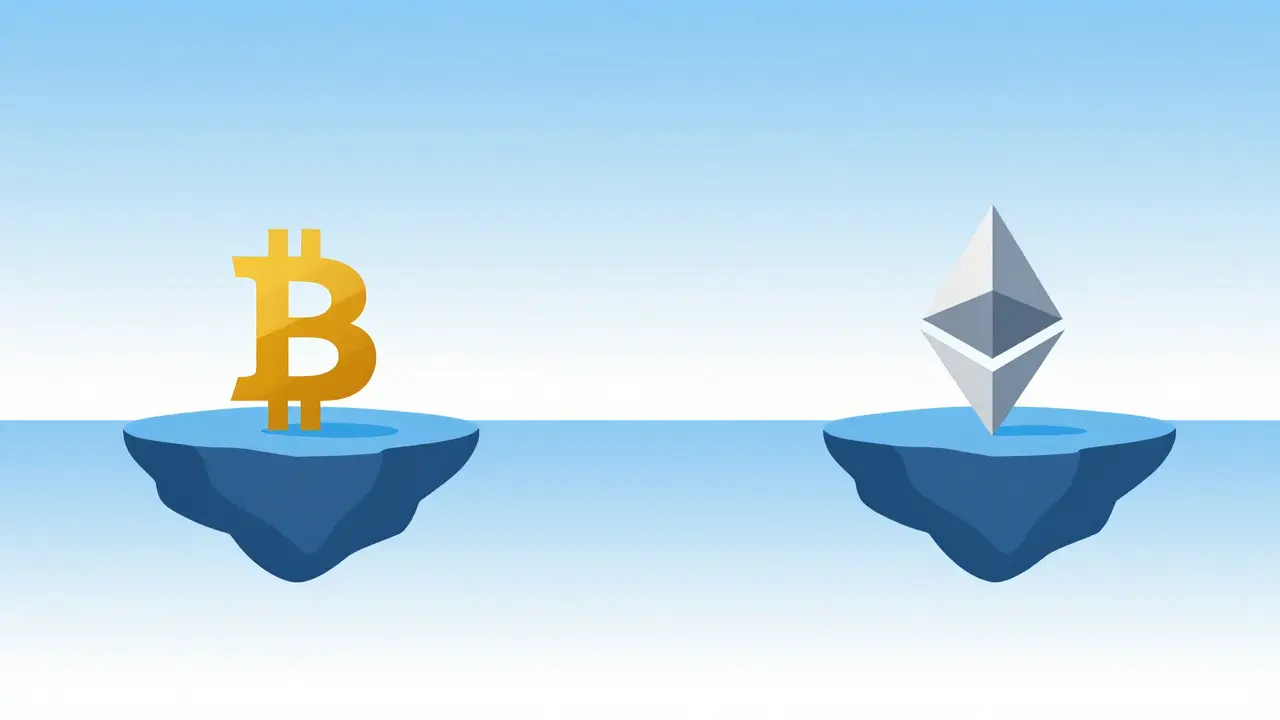
You’ve probably heard the phrase cross-chain bridges thrown around in crypto forums, but if you’re new to Web3, it might sound like technical jargon designed to confuse you. Let’s cut through the noise. Imagine two islands separated by a wide ocean. One island has gold (Bitcoin), and the other has silver (Ethereum). Without a boat or a bridge, people on one island can’t use the resources of the other. In the crypto world, blockchains are those isolated islands. They don’t naturally talk to each other because they run on different code, rules, and consensus mechanisms.
Cross-chain bridges are the boats. They allow digital assets, data, and commands to move between these separate blockchain networks. This isn’t just a convenience feature; it’s the backbone of a truly interconnected cryptocurrency ecosystem. Without them, your Bitcoin would sit idle while you wanted to use Ethereum-based DeFi apps, forcing you to sell your crypto on a centralized exchange-defeating the purpose of decentralization.
The Core Problem: Blockchain Fragmentation
To understand why bridges matter, you first need to grasp the problem they solve: fragmentation. When Vitalik Buterin launched Ethereum in 2015, it was the dominant smart contract platform. But over time, developers realized Ethereum had limits-high gas fees during peak times and slower transaction speeds. This led to the rise of alternative Layer 1 chains like Solana, Avalanche, and Binance Smart Chain (BSC), as well as Layer 2 scaling solutions like Arbitrum and Optimism.
Each of these networks is built for specific strengths. Solana prioritizes speed. Ethereum prioritizes security and developer activity. Polygon focuses on low-cost transactions. However, this specialization creates silos. If you hold USDC on Ethereum, you can’t directly use it on a lending protocol on Solana. The networks are mathematically and technically distinct. They have no native way to verify ownership or transfer value across their boundaries. This isolation limits liquidity, restricts user choice, and fragments the total addressable market for decentralized applications.
How Cross-Chain Bridges Actually Work
So, how do we get assets from one chain to another without trusting a middleman? Most modern cross-chain bridges use a mechanism known as "lock-and-mint." Here is the step-by-step process:
- Locking: You send your original token (e.g., ETH) to a smart contract on the source blockchain. This contract locks your funds so they cannot be spent or moved elsewhere.
- Minting: Once the lock is confirmed, a corresponding amount of a "wrapped" version of that token (e.g., wETH) is minted on the destination blockchain. This wrapped token is an ERC-20 equivalent that represents your original asset.
- Usage: You can now use this wrapped asset in any dApp on the destination chain-swapping it on Uniswap, providing liquidity on Curve, or borrowing against it on Aave.
- Burning: When you want to return to the original chain, you send the wrapped token back to the bridge’s smart contract on the destination chain, where it is burned (destroyed).
- Unlocking: The bridge verifies the burn event and releases your original locked assets on the source chain.
This system maintains a 1:1 peg between the original and wrapped assets. It ensures that the total supply of the asset remains consistent across both networks, preventing inflation or double-spending. For example, Wrapped Bitcoin (WBTC) allows Bitcoin holders to participate in Ethereum’s DeFi ecosystem without converting their BTC into fiat currency.
Trusted vs. Trustless Bridges: The Security Trade-Off
Not all bridges are created equal. The biggest distinction lies in their trust model, which directly impacts security and decentralization.
| Feature | Trusted (Centralized) Bridges | Trustless (Decentralized) Bridges |
|---|---|---|
| Control Mechanism | Relies on a multi-signature wallet or a single entity | Uses decentralized validators or cryptographic proofs |
| Security Risk | High risk of insider theft or key compromise | Risk depends on the economic security of the validator set |
| Speed & Cost | Faster and cheaper due to simplified verification | Slower and more expensive due to complex proof generation |
| Examples | Early versions of Thorchain, some custom bridge contracts | Wormhole, LayerZero, Stargate |
Trusted bridges are protocols that rely on a central authority or a small group of signers to validate transfers. While they are faster and cheaper, they introduce a single point of failure. If the private keys controlling the bridge are stolen, attackers can drain the locked assets. This was exactly what happened with the Ronin Bridge hack in 2022, where $600 million was stolen when nine of the ten required private keys were compromised.
In contrast, Trustless bridges are decentralized protocols that use cryptographic proofs or distributed validator networks to ensure security without relying on a single entity. Protocols like Wormhole and LayerZero fall into this category. They require multiple independent nodes to verify a transaction before it is executed on the destination chain. While this adds complexity and slightly higher costs, it aligns better with the decentralized ethos of crypto and significantly reduces the risk of catastrophic hacks.

Major Players in the Cross-Chain Space
Several projects have emerged as leaders in bridging technology, each offering unique approaches to interoperability.
- Wormhole: One of the most widely used general-purpose bridge protocols. It connects over 30 blockchains, including Ethereum, Solana, and Terra. Wormhole uses a network of guardians (validators) to sign messages that prove asset transfers occurred on the source chain.
- LaneLayerZero: Rather than building its own chain, LayerZero provides an omnichain messaging protocol. Developers integrate LayerZero SDKs into their dApps to enable direct communication between chains without needing a separate bridge interface.
- PolyNetwork: An open-source project that supports cross-chain transactions between various blockchains using a federated Byzantine agreement. It aims to provide a unified liquidity pool across multiple chains.
- Avalanche Teleporter: A native solution within the Avalanche ecosystem that allows message passing between Avalanche subnets and other EVM-compatible chains.
These tools are not just for moving tokens. They also facilitate cross-chain NFT transfers, enabling gamers to move their in-game assets from a high-speed gaming chain to a secure storage chain. They also support cross-chain decentralized exchanges (DEXs), allowing users to swap assets across chains in a single transaction.
Why Interoperability Matters for Your Portfolio
For everyday users, cross-chain bridges offer three primary benefits: cost efficiency, yield optimization, and access.
First, consider gas fees. Sending ETH on the mainnet can cost $10-$50 during congested periods. By bridging your ETH to a Layer 2 solution like Arbitrum or Optimism via a bridge, you can perform transactions for pennies. Second, yield opportunities vary by chain. A stablecoin might earn 2% APY on Ethereum but 8% APY on a newer chain like Base or Blast. Bridges allow you to chase these yields without selling your position. Third, access. Some innovative DeFi protocols launch exclusively on specific chains. If you want to use a cutting-edge lending platform on Solana but only hold assets on Ethereum, a bridge is your entry ticket.
The Risks You Must Know Before Bridging
Despite their utility, cross-chain bridges remain one of the most vulnerable parts of the crypto infrastructure. Between 2020 and 2024, bridges accounted for nearly half of all major DeFi hacks. Why? Because they hold massive amounts of value and often rely on complex, unaudited smart contracts.
Here are the top risks to watch out for:
- Smart Contract Bugs: Code errors can lead to exploits where attackers drain funds. Always check if the bridge has undergone audits from reputable firms like CertiK or OpenZeppelin.
- Validator Compromise: In trustless bridges, if a majority of validators collude or are hacked, they can forge false proofs and steal assets.
- Scam Interfaces: Phishing sites mimic legitimate bridge interfaces. Always bookmark the official URL and never click links from social media DMs.
- Slippage and Fees: Some bridges charge hidden fees or suffer from price slippage during volatile markets. Compare rates across multiple bridges before transferring large amounts.
To mitigate these risks, start with small test transactions. Use established bridges like Wormhole or native L2 bridges (like the Arbitrum Bridge) rather than obscure third-party services. Never share your private keys or seed phrase with any bridge interface.
The Future: Beyond Lock-and-Mint
The current lock-and-mint model is effective but imperfect. It creates fragmented liquidity because WBTC on Ethereum is not the same as WBTC on BSC-they are separate tokens backed by the same underlying asset. The future of cross-chain bridges lies in atomic swaps and intent-based routing.
Atomic swaps allow direct peer-to-peer exchange of tokens across chains without wrapping. This eliminates the counterparty risk associated with holding wrapped assets. Meanwhile, protocols like Chainlink CCIP (Cross-Chain Interoperability Protocol) aim to standardize messaging across chains, making interoperability seamless and invisible to the end user. As these technologies mature, the need for manual bridging will decrease, leading to a more fluid and secure crypto economy.
Are cross-chain bridges safe to use?
No bridge is 100% safe, but trustless bridges like Wormhole and LayerZero are significantly safer than trusted ones. Always audit the bridge's history, check for recent security incidents, and start with small amounts. Avoid bridges that have not been audited by reputable firms.
What is the difference between a wrapped token and the original token?
The original token exists on its native blockchain (e.g., BTC on Bitcoin). The wrapped token is a synthetic representation on a different chain (e.g., WBTC on Ethereum). While they track the same value, they are technically different assets issued by different smart contracts. You must bridge back to redeem the original.
How long does it take to bridge assets?
Transfer times vary by bridge and network congestion. Native L2 bridges can take 10-30 minutes. General-purpose bridges like Wormhole may take 1-5 minutes for confirmation plus additional time for finality. Always check the estimated time on the bridge interface before initiating.
Can I lose my money if a bridge gets hacked?
Yes. If a bridge's smart contract is exploited or its validators are compromised, your locked assets can be drained. This is why it is crucial to use well-established, decentralized bridges and to keep your holdings diversified across multiple chains to minimize exposure to a single point of failure.
Do I need to pay gas fees on both chains?
Yes. You typically pay a gas fee on the source chain to initiate the lock/burn transaction and a gas fee on the destination chain to claim the minted/unlocked assets. Some bridges bundle these fees into a single payment, but you still incur costs on both networks.